EMDR for kids & teens
Children don't process trauma the way adults do. They often can't articulate what happened or how they feel about it — not because they're not affected, but because language isn't always the right tool for overwhelming experiences. Standard talk therapy can feel like asking a child to explain something they don't have words for yet.
Child-adapted EMDR works differently. It uses the same evidence-based bilateral stimulation protocol, adapted for the way children actually process — through play, storytelling, drawing, movement, and imagination. The child doesn't have to narrate their trauma. They hold it internally while the therapist guides the process. And children often respond faster than adults, because their brains are more plastic and the material hasn't had decades to calcify.
Signs EMDR might help your child
Behavioral changes after a specific event — an accident, a loss, a frightening experience
Anxiety, nightmares, or sleep problems that started after something happened
Explosive reactions that seem bigger than the situation warrants
Withdrawal, regression, or sudden changes in mood or functioning
Physical symptoms — stomachaches, headaches — without a clear medical cause
Difficulty at school or with peers that developed after a stressful period
What sessions look like for kids
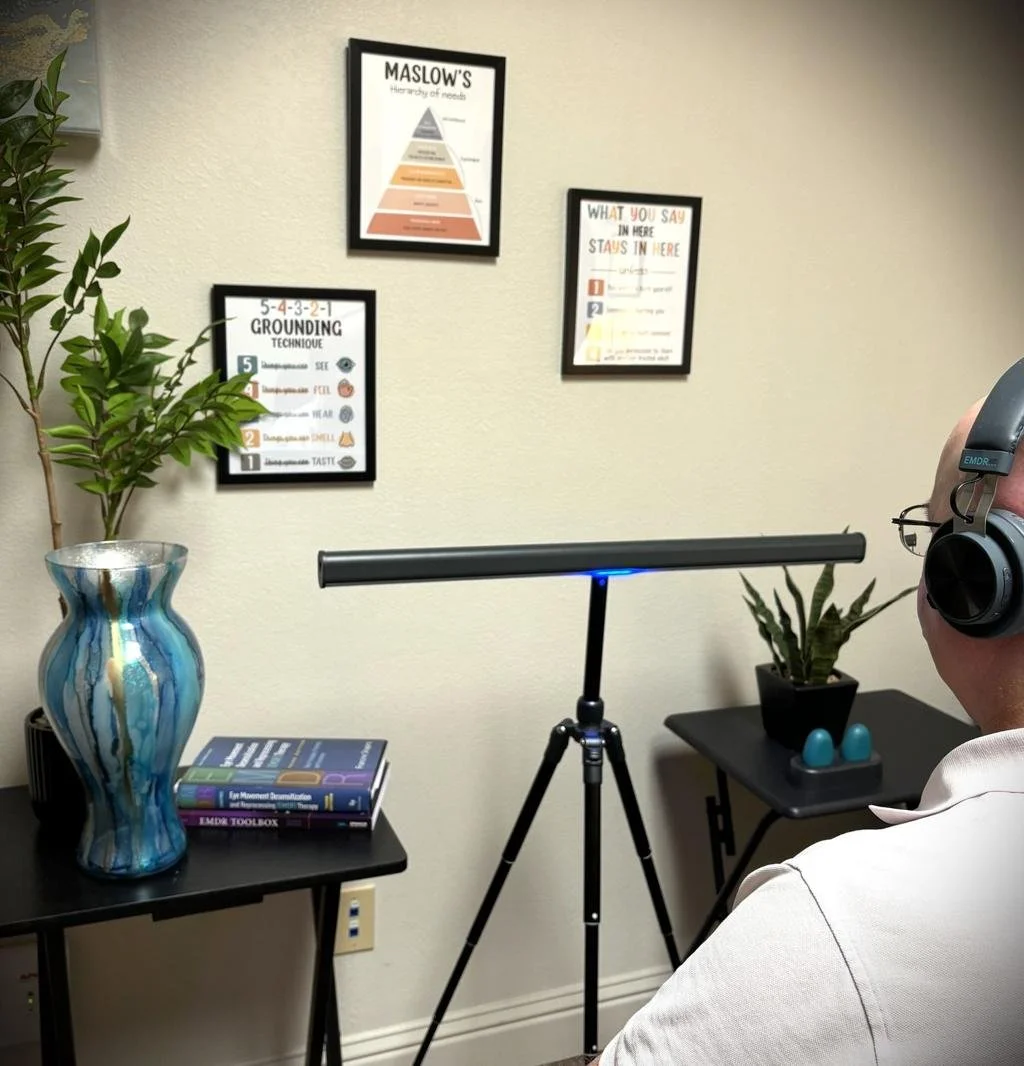
Child EMDR sessions look nothing like adult sessions. Depending on age and preference, bilateral stimulation might be taps on the knees, alternating sounds through headphones, or gentle movement. Younger children might use sandtray, puppets, or drawing as part of the process. The pace is always the child's. There's no pressure to perform or explain.
For teens
Teenagers are often better EMDR candidates than their parents expect. The structured, direct quality of EMDR tends to appeal to adolescents who find traditional talk therapy awkward — they don't have to sit and process their emotions out loud for an hour. They just have to notice what comes up. That's a much easier ask.
Your role as a parent
You're part of this. We keep parents informed about the treatment plan and provide guidance on how to support your child between sessions. Family therapy is also available when the relational system needs attention alongside the individual work.
Related blog articles: