
BlogLatest Articles

Dating While Autistic: Why You Should Stop Trying to Appeal to Everyone
Dating while autistic can feel exhausting—but maybe the goal isn't to get more matches.
Maybe the goal is to find better ones.
Many autistic adults try to make their dating profiles appeal to everyone. Instead, consider being more upfront about who you are and what you're looking for. While this may reduce the number of matches, it can increase the chances of connecting with someone who genuinely appreciates you.
Read our newest article to learn why authenticity can be one of your greatest strengths in dating.
If you've spent months (or years) on dating apps, you might feel like something is wrong with you.
You've gone on dates. You've tried changing your pictures. You've rewritten your bio. Maybe you've even hidden parts of yourself because you were afraid they would scare people away.
Then nothing changes.
It's easy to conclude:
"Maybe I'm just not relationship material."
I don't think that's the problem.
I think many autistic adults are approaching dating apps with the wrong goal.
Dating Apps Aren't About Convincing Everyone
Many people use dating apps like a marketing campaign.
They try to create a profile that appeals to as many people as possible.
The thinking goes something like this:
"If I get enough matches, eventually one will work out."
But that's exhausting.
Especially if you're autistic.
Every first date requires masking, uncertainty, reading social cues, recovering afterward, and wondering what went wrong.
Instead, try looking at dating apps as a filter, not a fishing net.
The goal isn't to attract hundreds of people.
The goal is to eliminate the people who were never going to be a good fit anyway.
Be Honest Earlier Than Feels Comfortable
This can feel scary.
Especially if you're carrying shame around things like:
never having had a serious relationship
being sexually inexperienced
living with your parents
recently learning you're autistic
having unusual interests
needing lots of alone time
Many people hide these things until the third or fourth date.
What if you did the opposite?
What if your profile said something like:
"I'm autistic and recently learned why dating has always felt confusing. I'm looking for someone who appreciates honesty, routine, and deep conversations."
Or:
"I've never been in a long-term relationship. I'm hoping to find someone who's patient, kind, and interested in building something real."
Would some people swipe left?
Absolutely.
And that's the point.
Let the Wrong People Reject Themselves
One of the hardest lessons in dating is realizing that not everyone is supposed to like us.
If someone isn't interested because you live with your parents while saving money...
...or because you've never had a girlfriend...
...or because you're autistic...
they've actually done you a favor.
They've removed themselves from consideration before either of you invested time or emotional energy.
That's success—not failure.
Think Like a Therapist Markets Their Practice
As therapists, we don't try to appeal to everyone.
If we advertise to "anyone who needs therapy," our message becomes vague and forgettable.
Instead, we speak directly to the people we're best equipped to help.
Dating works surprisingly similarly.
The clearer you are about who you are, the easier it becomes for the right people to recognize you.
Your goal isn't more dates.
Your goal is better dates.
You Don't Need Everyone
You only need one person who reads your profile and thinks:
"Finally. Someone who sounds genuine."
Authenticity naturally shrinks the dating pool.
But the people who remain are much more likely to appreciate the real you instead of the version you felt you had to create.
FAQ
Should I mention being autistic in my dating profile?
There isn't one right answer, but many autistic adults find that being upfront filters out people who aren't a good match and attracts those who appreciate authenticity.
Won't this reduce my matches?
Probably. But fewer, better-matched conversations may be more valuable than many conversations that never go anywhere.
Should I mention living with my parents?
If it's a meaningful part of your current life and likely to matter in a relationship, some people prefer to disclose it early rather than worry about revealing it later.
What if I've never been in a relationship?
Relationship experience isn't a measure of worth. For some people, honesty about this builds trust rather than reducing it. HONESTY builds trust, not EXPERIENCE!
Is masking helpful on dating apps?
Presenting yourself authentically may help attract people who are compatible with the real you rather than a version that's difficult to maintain over time.

Why Do I Feel Like I Don't Fit In? Understanding the Experience of Feeling Different
Why Do I Feel Like I Don't Fit In?
Most people have moments when they feel out of place.
Starting a new job.
Moving to a new city.
Walking into a room where you don't know anyone.
That's part of being human.
But some people experience something different.
They don't just feel out of place once in a while.
They've felt different for as long as they can remember.
They've spent years wondering:
"Why does everyone else seem to understand how to do life?"
If you've carried that question with you for years, you're not alone.
"I've always felt different."
Many adults describe feeling like they were somehow on the outside looking in.
They wanted friends.
They wanted connection.
They wanted to belong.
But it often felt like everyone else understood social rules that were never explained to them.
They found themselves watching other people closely.
Learning by observation.
Trying to figure out what everyone else seemed to do naturally.
For many people, this became so automatic that they didn't even realize they were doing it.
Feeling different doesn't always mean something is wrong.
There are many reasons someone may feel like they don't fit in.
Sometimes it's because they grew up in an environment where they weren't accepted.
Sometimes it's related to trauma.
Sometimes anxiety makes social situations feel more difficult.
Sometimes ADHD plays a role.
And sometimes autism helps explain why they've always experienced the world a little differently.
The important question isn't:
"Do I fit in?"
It's:
"Why have I felt this way for so long?"
You may recognize some of these experiences.
You often feel like you're observing conversations instead of naturally participating.
You replay interactions in your head afterward.
You wonder whether you talked too much.
Or not enough.
You feel like you're constantly trying to read between the lines while everyone else somehow just "gets it."
You sometimes copy other people's expressions, humor, or communication style without realizing it.
You leave social gatherings feeling completely drained.
You have moments where you think:
"Everyone else seems to know something I don't."
You can feel lonely even when you're surrounded by people.
One of the hardest parts of feeling different is that it isn't always about being alone.
Some people have families.
Close friends.
Successful careers.
Partners who love them.
And they still feel like no one truly understands what everyday life is like inside their head.
That kind of loneliness can be difficult to explain.
The problem isn't always social skills.
People often assume that feeling different means someone lacks social skills.
That's not necessarily true.
Many adults have excellent social skills.
They've learned them through years of careful observation and practice.
The challenge is that using those skills may require far more mental effort than other people realize.
By the end of the day, they're exhausted.
Not because they don't enjoy people.
Because interacting with people has required constant concentration.
What if you've spent years blaming yourself?
Many adults tell us they assumed they simply needed to:
Try harder.
Be less sensitive.
Stop overthinking.
Be more confident.
Be more outgoing.
After years of hearing those messages, it's easy to believe the problem is your personality.
Sometimes the problem isn't who you are.
Sometimes it's that you've never understood how your brain works.
That's a very different conversation.
Finding the right explanation matters.
Feeling different isn't a diagnosis.
It's an experience.
That experience can have many different causes.
For some people, the answer is autism.
For others, it's ADHD.
For others, trauma, anxiety, or another life experience provides a better explanation.
The goal isn't to choose a label.
The goal is to understand yourself accurately.
Because once you understand why, it's much easier to decide what helps.
You deserve to understand your own story.
If you've spent years wondering why you've never quite felt like everyone else, you're asking an important question.
You deserve thoughtful answers—not assumptions.
Whether those answers come through therapy, self-reflection, or a comprehensive assessment, understanding yourself is one of the most valuable investments you can make.
You don't have to spend the rest of your life wondering.
Related Resources
What Is Masking?
Why Am I So Exhausted After Socializing?
Autism vs. ADHD: How Do You Tell the Difference?

Can You Be Autistic and Not Know It Until Adulthood?
Many autistic adults aren't diagnosed until later in life because they learned to mask their differences or didn't fit outdated stereotypes of autism.
The short answer?
Absolutely.
In fact, many autistic adults spend decades believing they're simply "different" without ever considering autism as a possibility.
Some are diagnosed in their 20s.
Others in their 40s, 50s, 60s, or later.
Many people tell us the same thing after receiving a diagnosis:
"Looking back, it all makes sense now."
"Wouldn't someone have noticed?"
Not necessarily.
For many years, autism was understood through a very narrow lens.
Much of the early research focused on young boys with more obvious support needs.
People who didn't fit that picture were often overlooked.
Many adults grew up hearing things like:
"She's just shy."
"He's quirky."
"You're too sensitive."
"You're gifted."
"You worry too much."
"You'll grow out of it."
Some were diagnosed with anxiety or ADHD.
Some received no diagnosis at all.
Many simply learned to adapt.
You may have become very good at hiding your struggles.
Many autistic adults become experts at masking.
They watch other people closely.
They memorize social rules.
They rehearse conversations.
They learn what facial expressions are expected.
They hide sensory discomfort.
Over time, these strategies become so automatic that they don't even realize they're doing them.
Other people see someone who appears to be doing well.
They don't see the amount of effort it takes.
Why are so many adults figuring this out now?
There are several reasons.
Our understanding of autism has changed dramatically over the last two decades.
We now recognize that autism can look very different from one person to another.
More adults are also learning about autism through books, podcasts, social media, and conversations with autistic adults sharing their own experiences.
For many people, it's the first time they've encountered descriptions that actually sound like their lives.
Some people don't start asking questions until something changes.
Many adults function reasonably well for years.
Then life becomes more demanding.
Perhaps they:
Become parents.
Start a new career.
Experience burnout.
Lose routines that once helped them cope.
Face major life stress.
Reach menopause or another significant life transition.
Watch their child go through an autism evaluation.
Suddenly, the strategies that worked for years aren't enough anymore.
Rather than autism appearing later in life, it's often that the demands of life have finally exceeded the person's ability to keep compensating.
"I have friends... can I still be autistic?"
Yes.
Many autistic adults have meaningful friendships, long-term relationships, and successful careers.
Autism doesn't mean someone doesn't want connection.
It often means connection requires more effort.
The question isn't whether you've had relationships.
It's how you've experienced them throughout your life.
"I've always been able to make eye contact."
That's another common misconception.
Some autistic people avoid eye contact.
Some make typical eye contact.
Some force themselves to maintain eye contact because they've been told it's important.
One characteristic never tells the whole story.
Autism is identified by patterns across a lifetime—not by a single behavior.
What usually makes people start wondering?
Everyone's story is different, but many adults describe recognizing themselves in experiences such as:
Feeling different since childhood.
Constantly analyzing social interactions.
Needing significant time alone to recover after being with people.
Feeling overwhelmed by sensory input.
Loving routines or predictability.
Becoming deeply absorbed in interests.
Feeling like they're "performing" rather than naturally fitting in.
Wondering why life feels more exhausting than it seems for everyone else.
One of these experiences alone doesn't mean someone is autistic.
But together, they can suggest it's worth taking a closer look.
What if I'm wrong?
That's okay.
You don't need to diagnose yourself before seeking an evaluation.
Many people come in wondering whether they're autistic.
Some are.
Some aren't.
Others discover that ADHD, trauma, anxiety, or another explanation better fits their experiences.
The purpose of an assessment isn't to confirm what you already believe.
It's to help answer the question accurately.
What changes after a diagnosis?
Many people expect a diagnosis to change everything overnight.
In reality, you wake up the next morning as the same person you've always been.
What changes is your understanding.
Experiences that once felt confusing often begin to make sense.
You may stop blaming yourself for struggling with things that genuinely require more effort for you.
You may begin making choices that honor how your brain actually works instead of trying to force yourself into expectations that never fit.
For many adults, that's where healing begins.
Not because the diagnosis changes them.
Because it changes the story they've been telling themselves.
You deserve answers—not assumptions.
If you've been wondering whether autism could explain experiences you've had for most of your life, you don't have to keep guessing.
A comprehensive assessment can help you better understand your strengths, your challenges, and the lifelong patterns that have shaped your experiences.
Whether the answer is autism, ADHD, trauma, anxiety, or something else entirely, clarity is valuable.
Because understanding yourself is never a waste of time.
Related Resources
Autism in Women: Why So Many Are Diagnosed Later in Life
Autism vs. ADHD: How Do You Tell the Difference?

What Is Autistic Burnout?
Autistic burnout is a state of profound exhaustion caused by prolonged stress, masking, and sensory overload. Recovery often requires reducing demands and better understanding individual needs.
"I used to be able to keep up. Now I can barely get through the day."
Many adults describe reaching a point where the strategies they've relied on for years suddenly stop working.
They're exhausted.
Overwhelmed.
More sensitive to noise, light, and social interaction than they've ever been before.
Tasks that once felt manageable now seem impossible.
Some begin wondering if they're depressed.
Others think they're becoming lazy or losing motivation.
Many simply believe they're failing.
For some autistic adults, the experience may be something different:
Autistic burnout.
What is autistic burnout?
Autistic burnout is a state of profound physical, emotional, and mental exhaustion that can occur after prolonged periods of stress, masking, sensory overload, or trying to meet expectations that require far more energy than most people realize.
Unlike ordinary fatigue, burnout isn't fixed by getting one good night's sleep or taking a weekend off.
Many people describe it as feeling like their brain simply doesn't have any energy left.
What does autistic burnout feel like?
Everyone experiences burnout differently, but common experiences include:
Feeling exhausted even after resting.
Increased sensitivity to sounds, lights, textures, or crowds.
Difficulty concentrating.
More trouble with executive functioning.
Feeling emotionally overwhelmed.
Wanting to withdraw from social interaction.
Needing significantly more recovery time.
Difficulty speaking or finding words when overwhelmed.
Feeling like everyday tasks suddenly require enormous effort.
Many adults say,
"I don't recognize myself anymore."
Why does burnout happen?
Imagine carrying a backpack every day.
At first, it's heavy but manageable.
Over time, people keep adding things to it.
A little more responsibility.
A little more stress.
More social expectations.
More masking.
More sensory overload.
Eventually, the backpack doesn't just feel heavy.
It becomes impossible to carry.
That's similar to what many people describe with autistic burnout.
It's often not one stressful event.
It's years of accumulated effort.
Burnout is not the same as depression.
Autistic burnout and depression can look similar.
Both can involve exhaustion, reduced motivation, and withdrawing from activities.
The difference is often why those experiences are happening.
Someone experiencing depression may lose interest in things they once enjoyed.
Someone experiencing autistic burnout often still wants to engage with those interests—but simply doesn't have the energy.
Of course, it's also possible to experience both burnout and depression at the same time.
That's one reason a thoughtful evaluation is so important.
Burnout isn't a sign of weakness.
Many autistic adults have spent years pushing themselves to keep up.
They've ignored sensory overload.
Forced themselves through social situations.
Worked harder than anyone realized.
Continually adapted to environments that weren't designed with their needs in mind.
Burnout isn't evidence that they didn't try hard enough.
Often, it's evidence that they've been trying too hard for too long.
Can burnout make autism seem "worse"?
Many adults say they notice autistic traits becoming more obvious during burnout.
They may:
Find masking much harder.
Become more sensitive to sensory input.
Need additional downtime.
Have less energy for conversation.
Feel overwhelmed more quickly.
This doesn't necessarily mean autism is getting worse.
It often means the energy that once fueled constant adaptation has been depleted.
Recovering from burnout
Recovery doesn't usually happen overnight.
For many people, it begins with understanding what led to burnout in the first place.
That might include:
Reducing unnecessary demands.
Building more recovery time into daily life.
Recognizing sensory needs.
Setting healthier boundaries.
Learning when masking is helpful—and when it isn't.
Working with professionals who understand autism and neurodiversity.
Recovery isn't about becoming a different person.
It's about creating a life that asks less of your nervous system.
What if this sounds familiar?
Burnout can happen for many reasons.
Stress.
Medical conditions.
Depression.
Trauma.
Major life changes.
Autistic burnout is just one possibility.
If you've noticed a significant change in your energy, daily functioning, or ability to cope, it's worth talking with a qualified healthcare professional.
If you've also spent your life wondering why everyday experiences have always required so much effort, an autism assessment may help determine whether autism is part of the picture.
You weren't meant to live in survival mode forever.
Many adults spend years believing exhaustion is simply the price of functioning.
It isn't.
Understanding how your brain works can help you make choices that support your energy rather than constantly depleting it.
Sometimes the first step toward recovery isn't trying harder.
It's finally understanding why you've been so tired.

Do Online Autism Tests Actually Work?
Online autism tests are screening tools—not diagnostic tools. They can suggest whether further evaluation may be helpful but cannot diagnose autism.
If you've found yourself taking autism quizzes online at midnight, you're in good company.
Many adults begin wondering about autism after seeing something on social media, reading an article, listening to a podcast, or hearing someone describe an experience that feels surprisingly familiar.
The next step is often an online test.
You answer a series of questions.
A score appears.
Then you wonder...
"What does this actually mean?"
The short answer is:
Online autism tests can be a helpful starting point.
They cannot diagnose autism.
Why do autism quizzes exist?
Most online autism questionnaires were created as screening tools.
A screening tool helps answer one question:
"Is this worth looking into further?"
That's very different from answering:
"Am I autistic?"
Think of it like a smoke detector.
If the alarm goes off, it tells you something deserves attention.
It doesn't tell you exactly what's happening.
A high score doesn't automatically mean you're autistic.
This surprises many people.
Some individuals score quite high on online autism questionnaires and are not autistic.
Others score below the cutoff and later receive an autism diagnosis.
Why?
Because questionnaires only measure certain traits.
They don't know:
Your life story.
Your childhood.
Whether you've learned to mask.
Whether trauma has affected how you answer questions.
Whether ADHD or anxiety might explain some of your experiences.
How those traits have changed over time.
That's why scores should always be interpreted within the context of a comprehensive evaluation.
A low score doesn't necessarily rule autism out.
Some adults—particularly those who have spent years masking—don't recognize their own autistic traits.
Others answer questions based on how they function today rather than how they've experienced the world throughout their lives.
Some simply interpret the questions differently.
That's one reason clinicians don't rely on a single questionnaire when making a diagnosis.
Which online tests are people taking?
You may have heard of questionnaires such as:
Autism Spectrum Quotient (AQ)
RAADS-R
CAT-Q (Camouflaging Autistic Traits Questionnaire)
RBQ-2A
Other online screening tools
These measures can provide useful information.
But they are only one piece of the puzzle.
A comprehensive evaluation considers those results alongside interviews, developmental history, clinical observation, standardized assessment measures, and your unique life experiences.
Why do people get different scores on different tests?
Because each questionnaire measures something different.
Some focus on autistic characteristics.
Others measure masking.
Some look at repetitive behaviors.
Others explore social communication or sensory experiences.
It's completely normal for someone to score high on one measure and much lower on another.
That's another reason experienced clinicians don't make diagnostic decisions based on a single score.
What if social media made me wonder?
Social media has introduced many adults to autism for the first time.
For some people, that leads to life-changing self-understanding.
For others, short videos oversimplify complex experiences.
You might watch a video about sensory overload or masking and think,
"That sounds exactly like me."
Or,
"I do that too."
The reality is that many human experiences overlap.
One characteristic alone doesn't determine whether someone is autistic.
The important question isn't,
"Do I relate to this video?"
It's,
"Does autism best explain the overall pattern of my life?"
So... should I take an online autism test?
If you're curious, there's nothing wrong with taking a reputable screening questionnaire.
It may help you organize your thoughts or identify experiences you've never put into words before.
Just remember what the results can—and cannot—tell you.
A screening tool is designed to raise questions.
Not answer them.
When is it worth seeking an assessment?
You may benefit from a comprehensive evaluation if you've spent years wondering why you've always felt different or if you've consistently experienced challenges related to social communication, sensory processing, routines, relationships, or feeling like you're working much harder than everyone else just to get through everyday life.
Many adults seek an assessment because they aren't looking for a label.
They're looking for clarity.
Whether the answer turns out to be autism, ADHD, trauma, anxiety, or another explanation, understanding yourself can be an important step toward finding strategies that truly fit your needs.
The goal isn't to get a diagnosis.
It's to get the right answer.
Sometimes that answer is autism.
Sometimes it isn't.
Either way, you deserve an evaluation that looks beyond a number on a questionnaire and considers the whole story of your life.
Because understanding yourself has never been about checking boxes.
It's about finally making sense of experiences you've carried for years.

What Happens During an Adult Autism Assessment?
Adult autism assessments help identify lifelong patterns of autism while considering ADHD, trauma, anxiety, and other overlapping conditions. A comprehensive evaluation provides clarity and individualized recommendations.
One of the biggest reasons adults delay getting an autism assessment is simple:
They don't know what to expect.
Some people imagine they'll spend hours answering strange questions.
Others worry they'll be judged, analyzed, or expected to "prove" they're autistic.
Many wonder if they'll accidentally say the wrong thing and affect the results.
Fortunately, that's not how a comprehensive assessment works.
Our goal isn't to catch you saying the "right" or "wrong" things.
Our goal is to understand you.
There isn't a test you can pass or fail.
This surprises a lot of people.
Autism isn't diagnosed by a single questionnaire.
There isn't one magic test that tells us the answer.
Instead, a quality assessment looks at many different pieces of information and asks an important question:
What explanation best fits this person's lifelong experiences?
That means we're interested in patterns—not isolated symptoms.
Before we meet
Before your appointments, you'll complete intake paperwork and questionnaires that help us begin understanding your history and current concerns.
These forms aren't designed to determine whether you're autistic.
They simply give us a starting point for our conversations.
During your assessment
First Appointment: history taking - this is standard, required by insurance
Second Appointment: online assessments - these are similar to online quizzes that you likely have done in the past but they are on legitimate testing platforms
Third Appointment: MIDGAS2 Interview - this is a conversational appointment where we will ask you about your experiences with things like: special interests, sensory sensitivities, social and communication history, etc.
Your assessment is a conversation -not an interrogation.
We'll spend time talking about topics such as:
What brought you in now.
Your childhood and early development.
Friendships and relationships.
School and work experiences.
Communication style.
Sensory experiences.
Daily routines.
Interests and hobbies.
Executive functioning.
Strengths.
Challenges.
The strategies you've developed to navigate everyday life.
Many adults tell us this is the first time they've had an opportunity to tell their whole story.
We also use standardized assessment tools.
Along with our clinical interviews, we use evidence-based assessment measures to gather additional information.
Different people complete different measures depending on their history and presentation.
These tools are important.
But they don't replace clinical judgment.
Assessment isn't about adding up points.
It's about understanding the person sitting in front of us.
What if I've learned to hide my struggles?
Many adults worry they'll "look too normal."
This is especially common among people who have spent years masking.
Remember...
We're not evaluating how you behave during one appointment.
We're looking at your lifelong experiences.
Part of our job is understanding not only what you do, but how much effort it takes to do it.
We also consider other explanations.
One of the most important parts of an autism assessment is asking:
Could something else better explain these experiences?
Autism shares characteristics with ADHD, anxiety, trauma, obsessive-compulsive disorder, sensory processing differences, depression, and other conditions.
Sometimes autism is the best explanation.
Sometimes another diagnosis fits better.
Sometimes several conditions exist together.
Our responsibility is to carefully consider the whole picture rather than jumping to conclusions.
Your feedback appointment
Once we've completed the assessment, we'll meet again to discuss the results.
We'll explain:
Whether you meet diagnostic criteria.
How we reached our conclusions.
The strengths we observed.
Any additional diagnoses or factors we considered.
Recommendations moving forward.
Opportunities for questions and discussion.
This isn't simply receiving a diagnosis.
It's an opportunity to better understand yourself.
Will I receive a written report?
Yes. Everyone receives a short written report that clarifies findings.
You'll have the option to receive a comprehensive written report that summarizes the assessment process, the information gathered, our clinical impressions, diagnostic conclusions, and individualized recommendations. —this is NOT covered by insurance and costs $200 out of pocket.
Many clients use this report for:
Personal understanding.
Therapy.
Workplace accommodations.
Educational accommodations.
Medical providers.
Future treatment planning.
What if I'm nervous?
That's completely normal.
Many adults arrive feeling anxious.
Some worry they'll be judged.
Some worry they won't remember important details.
Some worry they'll discover they're "making everything up."
Please know...
You don't need to prepare the "right" answers.
You don't need to convince us of anything.
You don't need to perform.
Your only job is to tell your story as honestly as you can.
Our job is to listen carefully, ask thoughtful questions, and help make sense of the patterns together.
Whether the answer is yes or no...
Many people assume the value of an assessment depends on receiving an autism diagnosis.
We see it differently.
The value comes from gaining clarity.
Sometimes that clarity confirms autism.
Sometimes it points toward ADHD.
Sometimes trauma.
Sometimes another explanation entirely.
Whatever the outcome, our hope is that you leave with a deeper understanding of yourself than when you arrived.
Because understanding yourself is never wasted.
Frequently Asked Questions
How many appointments are involved?
Most adult assessments take place over three to four appointments so there's enough time to gather information, complete assessment measures, interpret the results, and review everything together.
Can appointments be done by telehealth?
YES! Most of our assessments are done via telehealth as people seem to be more comfortable in their own homes.
Should I bring a family member?
Sometimes information from someone who knew you as a child can be helpful, but it isn't always necessary. We'll discuss this with you before your assessment.
What if I've already been diagnosed with ADHD?
That's very common. Many adults have both ADHD and autism, while others discover that ADHD explains many of their experiences. Your assessment will consider both possibilities.

Autism in Women: Why So Many Are Diagnosed Later in Life
Many autistic women learn to mask their differences, leading to delayed diagnosis. Understanding these patterns can help explain lifelong experiences.
For years, autism was thought of as something that mostly affected boys.
As a result, countless girls and women grew up without anyone recognizing what they were experiencing.
Instead, many were described as:
Shy.
Quiet.
Sensitive.
Dramatic.
Gifted.
Anxious.
Perfectionistic.
"Too much."
"Too emotional."
Many learned to adapt so well that no one considered autism—not teachers, not family members, and sometimes not even mental health professionals.
Today, we know better.
Autism has always existed in women.
We simply haven't always recognized what it looks like.
"But I don't seem autistic..."
This is one of the biggest barriers to diagnosis.
Many women compare themselves to outdated stereotypes.
They think:
"I make eye contact."
"I have friends."
"I'm married."
"I understand emotions."
"I'm successful at work."
"I don't look autistic."
The truth is...
None of those things rule autism in or out.
Autism is not defined by one behavior.
It's defined by lifelong patterns in communication, social understanding, sensory processing, routines, interests, and the way someone experiences the world.
Many women become experts at masking.
From an early age, many girls learn that fitting in is important.
They watch.
Observe.
Copy.
Memorize.
Practice.
They study how other people dress, speak, laugh, make friends, and carry conversations.
Over time, those strategies become so automatic that many women don't even realize they're masking.
Other people see someone who appears socially comfortable.
They don't see the amount of mental energy it takes to maintain that appearance.
"I've always felt like I was pretending."
This is something we hear often.
Not pretending to be someone else.
Pretending that everyday life isn't as difficult as it actually feels.
Many women describe feeling like they're constantly performing.
They know what they're supposed to say.
How they're supposed to react.
When they're supposed to smile.
But underneath that performance, they often feel confused, overwhelmed, or exhausted.
Some describe it as feeling like an actor who never gets to leave the stage.
Autism can look different in women.
While every autistic person is unique, many women describe experiences such as:
Feeling socially "different" since childhood.
Becoming deeply interested in specific topics, even if those interests appear socially typical.
Feeling emotionally overwhelmed by conflict.
Needing significant time alone after social interaction.
Sensory sensitivities that others don't understand.
Difficulty maintaining friendships despite wanting close relationships.
Constantly analyzing conversations afterward.
Feeling like they're "too much" or "not enough."
Chronic burnout from trying to meet everyone else's expectations.
These experiences aren't unique to autism.
But when they form a lifelong pattern, they may deserve a closer look.
Why are so many women diagnosed after their children?
One of the most common pathways to diagnosis happens unexpectedly.
A woman's child is evaluated for autism.
As she completes questionnaires or learns about autistic traits, she begins thinking:
"Wait... I do that."
"I've always done that."
"I thought everyone did that."
For many women, their child's assessment becomes the first time they seriously consider autism for themselves.
Others begin exploring the possibility after learning about autism through social media, books, podcasts, or conversations with friends.
What about anxiety, ADHD, or trauma?
Many autistic women have also experienced anxiety, depression, ADHD, trauma, eating disorders, or obsessive-compulsive traits.
Sometimes those diagnoses are accurate.
Sometimes they're only part of the story.
Sometimes autism helps explain why years of trying to "fix" anxiety never fully addressed what they were experiencing.
That's why a comprehensive assessment looks at your entire history—not just your current symptoms.
Receiving a diagnosis as an adult
Many women describe receiving an autism diagnosis as an emotional experience.
Some feel relief.
Some grieve the years they spent blaming themselves.
Some feel angry that no one recognized it earlier.
Many feel all of those emotions at the same time.
There isn't a right or wrong reaction.
For many people, an accurate diagnosis doesn't change who they are.
It changes how they understand themselves.
Instead of asking,
"Why am I failing at things that seem easy for everyone else?"
they begin asking,
"What supports do I need in order to thrive?"
That shift can be incredibly powerful.
Could autism explain your experiences?
No single article—or online checklist—can answer that question.
But if you've spent years feeling different without understanding why, you deserve thoughtful answers.
A comprehensive assessment considers your strengths, your challenges, your history, and your unique experiences.
Because understanding yourself isn't about finding another label.
It's about finally making sense of a story you've been living your entire life.

Autism vs. ADHD: How Do You Tell the Difference?
Autism and ADHD share many characteristics, including executive functioning challenges and sensory differences. A comprehensive assessment looks beyond symptoms to understand why those experiences occur.
One of the most common things we hear from adults is:
"I know something fits... I just don't know if it's ADHD, autism, or both."
It's a fair question.
ADHD and autism share many characteristics. Both can affect attention, relationships, emotional regulation, sensory experiences, and everyday life. It's also common for people to have both conditions.
In fact, research has shown that autism and ADHD frequently occur together.
The challenge is that two people can have the same outward behavior for completely different reasons.
That's why a thorough assessment looks beyond what someone does and explores why they do it.
The overlap
Both autistic adults and adults with ADHD may experience:
Difficulty maintaining attention.
Feeling overwhelmed in busy environments.
Emotional overwhelm.
Challenges in relationships.
Executive functioning difficulties.
Anxiety.
Burnout.
Trouble sleeping.
Sensory sensitivities.
Feeling "different" from other people.
Looking only at that list, it can be almost impossible to tell the difference.
The details matter.
ADHD often looks like...
People with ADHD frequently describe their brain as moving faster than they can keep up with.
They may:
Forget appointments.
Lose track of conversations.
Misplace everyday items.
Start projects with excitement but struggle to finish them.
Become distracted by new ideas.
Hyperfocus on things they enjoy.
Interrupt conversations because they're afraid they'll forget what they wanted to say.
Struggle to estimate time or stay organized.
Many adults with ADHD know exactly what they want to do.
Their challenge is consistently doing it.
Autism often looks like...
Autistic adults often describe feeling like they've been translating the social world for as long as they can remember.
They may:
Feel exhausted after social interaction.
Prefer direct, clear communication.
Have lifelong sensory sensitivities.
Find comfort in routines and predictability.
Develop deep, focused interests.
Notice patterns and details that others overlook.
Need additional time to recover after busy environments.
Feel like they've been observing social rules rather than naturally understanding them.
Many autistic adults don't necessarily struggle because they can't understand people.
They struggle because understanding people often requires significantly more mental effort.
What if you have both?
Many adults do.
Someone with both autism and ADHD may feel pulled in opposite directions.
One part of them craves routine.
Another part becomes bored by it.
One part wants predictability.
Another part seeks novelty.
One part notices every detail.
Another part forgets where they left their keys five minutes ago.
Many people with both conditions describe feeling like they're constantly arguing with themselves.
Understanding both conditions can make experiences that once seemed contradictory finally begin to make sense.
What about socializing?
This is one area where the reasons behind a behavior become especially important.
Someone with ADHD may interrupt because their thoughts move quickly and they're afraid they'll forget what they wanted to say.
An autistic person may interrupt because they believe sharing related information shows interest and connection, or because they don't recognize the subtle cues that someone hasn't finished speaking.
The behavior may look similar.
The underlying reason is different.
Understanding that difference helps guide treatment and support.
Sensory experiences
Both ADHD and autism can involve sensory sensitivities.
However, those experiences are often different.
Autistic individuals frequently describe lifelong patterns of becoming overwhelmed by certain sounds, lights, textures, smells, or crowded environments.
Adults with ADHD may also notice sensory sensitivities, but they're often closely tied to distraction, difficulty filtering information, or becoming overstimulated when many things compete for attention.
Again, there is considerable overlap.
That's why no single symptom can determine the diagnosis.
Can anxiety look like autism or ADHD?
Absolutely.
So can trauma.
So can depression.
Sleep deprivation.
Chronic stress.
Medical conditions.
That's why online quizzes and checklists should never be used to diagnose yourself.
They can help you recognize patterns and decide whether it's worth seeking an evaluation, but they can't tell the whole story.
So how do professionals tell the difference?
A comprehensive evaluation looks at much more than a list of symptoms.
It explores questions such as:
When did these patterns begin?
Have they been present throughout your life?
How do they affect work, relationships, and daily functioning?
What situations make them better or worse?
Are there signs of both autism and ADHD?
Could another condition better explain these experiences?
Rather than asking, "Does this person have symptom X?"
We're asking,
"What explanation best fits this person's lifelong story?"
That's an important difference.
It's okay if you're not sure.
Many adults spend years trying to figure this out on their own.
Some become convinced they have ADHD.
Others become convinced they have autism.
Some discover they have both.
Others learn that trauma or another condition explains their experiences more accurately.
The goal isn't to guess correctly.
The goal is to understand yourself as accurately as possible.
Because the better you understand how your brain works, the easier it becomes to find strategies that actually help.

Why Am I So Exhausted After Socializing?
Feeling exhausted after socializing isn't always about being introverted. For some people, social interaction requires intense mental effort, making recovery time essential.
"I had a great time... so why do I feel like I need two days to recover?"
If you've ever canceled plans after spending time with people -not because you were upset, but because you simply couldn't do one more conversation- you aren't alone.
Many adults describe feeling completely drained after social situations, even when they enjoy the people they're with.
They wonder if they're antisocial.
Introverted.
Socially anxious.
Or just "bad at being around people."
Sometimes those explanations fit.
Sometimes they don't.
For many people, social exhaustion has less to do with whether they enjoy people and more to do with how much mental energy interacting requires.
Everyone gets tired sometimes.
There's nothing unusual about wanting some quiet after a busy weekend.
But some people experience social exhaustion very differently.
Instead of feeling pleasantly tired, they feel completely depleted.
They may need hours, or even days, to recover.
Simple tasks suddenly feel overwhelming.
Noise becomes irritating.
Decision-making becomes harder.
They don't necessarily want to be alone because they're upset.
They need to be alone because their brain has reached its limit.
Why is socializing so tiring for some people?
Think about driving somewhere you've never been before.
You probably turn down the radio.
Pay closer attention.
Watch every street sign.
Double-check your GPS.
By the time you arrive, you're more tired than you would have been driving somewhere familiar.
Why?
Because your brain was working much harder.
For some people, social interaction feels like that every day.
Their brain is constantly processing:
Facial expressions
Tone of voice
Body language
Eye contact
Timing
Conversation flow
Background noise
Whether they're talking too much—or not enough
Whether someone is joking, serious, annoyed, or bored
Most of this happens automatically for many people.
For others, much of it requires conscious effort.
That effort adds up.
It's not always about being shy.
People often assume that someone who gets exhausted by socializing must be shy or socially anxious.
That's not necessarily true.
Some of the most outgoing people are also the most exhausted afterward.
They enjoy people.
They enjoy conversation.
They simply use a tremendous amount of mental energy while doing it.
The role of masking
Many autistic adults describe something called masking.
Masking means consciously or unconsciously adjusting the way you communicate or behave in order to fit social expectations.
It might include:
Rehearsing conversations.
Forcing eye contact.
Monitoring facial expressions.
Hiding sensory discomfort.
Suppressing natural movements.
Carefully choosing what to say.
Constantly checking whether you're "doing it right."
Imagine acting in a play for several hours without ever leaving the stage.
Even if you love acting...
You're going to be tired afterward.
Sensory overload can make it even harder
Social situations aren't just about conversation.
They're often full of competing sensory information.
Bright lights.
Music.
Multiple conversations happening at once.
Strong smells.
People moving around.
Unexpected interruptions.
For someone with sensory sensitivities, the brain isn't just managing social interaction.
It's filtering an enormous amount of incoming information at the same time.
That combination can be incredibly draining.
Could ADHD play a role?
Absolutely.
Many adults with ADHD also experience social exhaustion.
Trying to stay focused during conversations, resisting the urge to interrupt, managing impulsivity, and filtering distractions all require effort.
Some people have ADHD.
Some have autism.
Many have both.
That's one reason it's important not to jump to conclusions based on a single experience.
Could trauma or anxiety cause this too?
Yes.
Trauma and anxiety can also make social situations exhausting.
If your nervous system is constantly scanning for danger, rejection, criticism, or conflict, social interaction naturally becomes more tiring.
The goal isn't to assume one explanation.
It's to understand which explanation best fits your lifelong experiences.
So... how do I know what's causing it?
That's where patterns matter.
Ask yourself:
Have I always felt this way, even as a child?
Is it only certain social situations?
Do I recover quickly, or does it take days?
Am I exhausted because of people -or because of everything my brain is processing while I'm with people?
Are there other lifelong experiences that seem connected?
One experience rarely tells the whole story.
But many experiences, viewed together, often do.
You don't have to push through forever.
Many adults spend years believing they simply need to "try harder."
Push themselves more.
Be more outgoing.
Stop being so sensitive.
Sometimes the answer isn't trying harder.
Sometimes it's understanding why something feels so hard in the first place.
When people understand how their brain works, they can begin making choices that reduce unnecessary exhaustion instead of blaming themselves for experiencing it.
Understanding yourself is the first step.
Whether your social exhaustion is related to autism, ADHD, anxiety, trauma, sensory processing, or another factor entirely, it deserves curiosity -not judgment.
The goal isn't to label yourself.
The goal is to better understand yourself.
Because life becomes much easier when you stop fighting your brain and start working with it.

What Is Masking? (And Why Is It So Exhausting?)
Masking is the process of consciously or unconsciously hiding autistic traits to fit social expectations. While it can help people navigate everyday life, it often requires significant mental energy and may contribute to exhaustion and burnout.
If you've recently started wondering whether you might be autistic, you've probably come across the word masking.
For many adults, it's the first time they've seen a word that describes something they've been doing for most of their lives.
Masking is the process of consciously or unconsciously changing the way you speak, move, communicate, or interact in order to fit social expectations.
It isn't lying.
It isn't pretending to be someone you're not.
It's often a survival strategy.
Many people begin masking in childhood after realizing that being themselves leads to criticism, confusion, teasing, or rejection. Over time, those adjustments can become so automatic that they no longer realize they're doing them.
What does masking look like?
Masking looks different for everyone, but common examples include:
Rehearsing conversations before they happen.
Replaying conversations afterward to look for mistakes.
Studying how other people behave and copying what seems to work.
Forcing eye contact because you've been told it's expected.
Smiling when you're uncomfortable.
Laughing even when you don't understand the joke.
Hiding sensory discomfort.
Suppressing movements like rocking, fidgeting, or hand movements.
Memorizing "scripts" for common social situations.
Pretending you're less excited about your interests because you've been told you talk about them too much.
Many people become so skilled at masking that others would never guess how much mental effort everyday interactions require.
Imagine speaking a second language all day.
One way to understand masking is to imagine moving to a country where everyone speaks a language you never completely mastered.
You can communicate.
You know enough to get by.
But every conversation requires concentration.
You're constantly translating.
Checking yourself.
Watching for mistakes.
By the end of the day, you're mentally exhausted.
For many autistic adults, masking can feel similar.
It's not that they can't socialize.
It's that socializing often requires much more conscious effort than people realize.
Why is masking so exhausting?
Your brain is doing several jobs at once.
You're trying to follow the conversation while also wondering:
Am I making enough eye contact?
Did I interrupt?
Am I talking too much?
Am I talking enough?
Is my facial expression right?
Did that joke make sense?
Are they bored?
Did I miss something?
Most people don't consciously think about these things.
Many people who mask do.
That constant self-monitoring uses an enormous amount of mental energy.
By the end of the day, it's common to feel emotionally drained, physically tired, or desperate for quiet and solitude.
The hidden cost of masking
Masking can help someone succeed at work, school, or in relationships.
But it often comes with a cost.
Many people describe:
Chronic exhaustion.
Anxiety before social events.
Feeling like they're "performing" instead of simply being themselves.
Difficulty knowing who they really are.
Burnout after long periods of pushing themselves.
Feeling misunderstood because other people only see the mask.
Some people become so good at masking that even close friends or family don't realize how much effort daily life requires.
Does masking mean I'm autistic?
Not necessarily.
People may mask for many reasons.
Trauma, anxiety, ADHD, cultural expectations, and other life experiences can all influence how someone presents themselves.
Masking alone does not mean someone is autistic.
However, when masking occurs alongside lifelong differences in communication, sensory experiences, routines, interests, and social understanding, it may be worth exploring whether autism could be part of the picture.
That's one reason a comprehensive assessment is so important.
Rather than looking at one behavior in isolation, an evaluation considers your lifelong experiences and the patterns that connect them.
What happens if I stop masking?
This is a question many adults ask after learning about autism.
The answer isn't simply, "Stop."
Masking developed for a reason.
For many people, it helped them stay safe, avoid bullying, keep jobs, or navigate environments that didn't understand neurodiversity.
Instead of trying to eliminate masking overnight, many people begin by asking:
When am I masking?
When is masking helpful?
When is it hurting me?
Where can I safely be more authentic?
The goal isn't to ignore social expectations.
The goal is to reduce the amount of energy spent hiding who you are.
Learning to understand yourself
For many adults, discovering the concept of masking brings an unexpected feeling:
Relief.
Not because it answers every question.
Because it finally gives a name to an experience they've struggled to describe for years.
Whether masking is part of autism, ADHD, trauma, anxiety, or another experience, understanding it can be the first step toward greater self-awareness and self-compassion.
You don't have to figure it out alone.
If you've been wondering whether autism might help explain your lifelong experiences, a comprehensive assessment can help you better understand the whole picture.

You Haven't Even Started Yet and You're Already Exhausted. Here's Why.
You have a project. A good one, even. Maybe one you actually want to do. Maybe one you came up with yourself, which means there's zero excuse for what's about to happen — at least that's what the voice in your head will tell you approximately forty-seven times over the next several days.
You sit down. You think about the project. And then, in approximately the span of a long exhale, something shifts. The air gets heavier. Your motivation, which was right there a moment ago, seems to have left the building without a note. You feel — there's no more precise word for it — done. Not done as in finished. Done as in depleted. Worn out. Like you've already run the race and someone forgot to tell you that you get a medal at the end.
You haven't done a single thing. You haven't opened a document, sent an email, made a phone call, or written one word. And yet your nervous system is presenting you with a bill for services rendered, and the bill is enormous.
This is not laziness. This is not avoidance. This is AuDHD project paralysis — and once you understand what's actually happening, you may find yourself feeling considerably less like a fundamentally broken human being.
The ADHD Brain Does Not Gently Preview. It Premieres.
Neurotypical task initiation tends to be relatively linear. Person thinks about task. Person identifies first step. Person does first step. Steps follow steps in an orderly, civilized fashion, like people in a queue who have agreed to behave.
The ADHD brain does not do this.
The ADHD brain, when pointed at a project, immediately and involuntarily generates the entire thing at once. Not in sequence. Not in manageable portions. All of it, simultaneously, in full — every step, every dependency, every potential problem, every thing that needs to happen before the other thing can happen, every person you need to contact who might not respond, every decision point where you might make the wrong call, every way this could go sideways, and also, inexplicably, that one thing you forgot to do three weeks ago that has nothing to do with this project but has now joined the presentation anyway.
It's not thinking about the project. It's experiencing a complete, rapid-fire, multi-sensory montage of the entire project's existence — beginning to end, best case and worst case, all lanes of the highway at once.
This happens fast. Faster than you can consciously track. And it happens whether you want it to or not.
For neurotypical brains, this kind of rapid scanning can be useful — a quick mental simulation that surfaces relevant concerns. For the ADHD brain, it's more like being handed a fire hose when you asked for a glass of water. The information is all there. It is simply arriving at a volume and velocity that makes it difficult to do anything with.
And that would be complicated enough on its own. But then the autism shows up.
The Autistic Nervous System Doesn't Simulate. It Experiences.
Here is the part that most descriptions of ADHD project paralysis miss — the part that makes AuDHD a genuinely different animal.
The autistic nervous system doesn't process information at arm's length. It doesn't watch the preview from a safe seat in the back of the theater. It is, by its nature, deeply and thoroughly in whatever it is processing. Sensory information lands harder. Emotional information lands harder. Anticipated information — things that haven't even happened yet — also lands harder.
So when the ADHD brain runs its involuntary full-project simulation, the autistic nervous system is not observing that simulation. It is living it. Every step of the project is not just mentally noted — it is felt. The effort of each task registers as effort. The uncertainty of each decision point registers as genuine uncertainty. The potential difficulty of each obstacle activates the stress response as though the obstacle is present and real and happening right now, today, in this moment, which it is not, but the nervous system cannot entirely tell the difference.
This is not catastrophizing. This is not anxiety in the clinical-dysfunction sense, though it can certainly look like it from the outside. This is an extraordinarily thorough nervous system doing exactly what it does — processing fully, deeply, and completely — applied to a future event that the ADHD brain just handed it in its entirety, all at once, without warning.
The result is that your nervous system has, in essence, already done the project. It has run every step through its full processing sequence. It has spent real neurological resources experiencing the weight of the work. And it has done all of this before you've touched a single thing.
And now it's tired.
Of course it's tired. It just did the whole project.
The Weighted Blanket Descends
This is the moment people describe as the weighted blanket. The sudden heaviness. The motivation that was present and then, without a clear transition, simply wasn't. The impulse to lie down, to do something small and low-stakes, to check your phone, to clean one thing, to exist horizontally for a while.
It doesn't feel like a choice. It isn't a choice. It's a system that has just run a very expensive simulation going into a kind of low-power mode because it has genuinely expended something real.
And then — because we are who we are — we look at this moment of heaviness and we tell ourselves a story about it. We call it procrastination. We call it laziness. We call it not wanting it badly enough, not being disciplined enough, not being the kind of person who can just do things like normal people apparently do, effortlessly, without drama, without needing to recover from a project they haven't started yet.
This story is false. It is also extremely convincing, and most of us have been telling it to ourselves for so long it has taken on the quality of established fact.
It is not fact. It is a misdiagnosis of the mechanism.
Why the Stakes Make It Worse
Here is an additional cruelty: the more the project matters to you, the worse this tends to be.
Because if the project matters, the simulation runs hotter. There's more emotional weight in each step. More consequences attached to each decision point. More self riding on the outcome. The autistic nervous system, which takes things seriously by design, takes this seriously. It processes the importance fully. It holds the stakes in its body like something physical.
A project you care about deeply is, neurologically speaking, a project your system is going to work very hard on — including in the pre-start simulation phase where it is doing enormous amounts of invisible processing without producing anything you can point to.
This is why you can feel more stuck on the things you most want to do. Not because you don't want them. Because you want them so much that your nervous system treats them with the full weight of things that matter, which is expensive, which is exhausting, which is the thing nobody tells you when they're asking why you haven't started yet.
The Shame That Gets Added on Top
We cannot discuss this without discussing shame, because shame is the thing that takes a hard neurological situation and makes it genuinely unmanageable.
The shame arrives right on schedule. It shows up with receipts. It reminds you of every other time this has happened, every project that got stalled at the starting line, every person who seemed to just handle things without all of this. It tells you that you're behind. That you're wasting time. That you knew this was going to happen and you let it happen anyway, which is somehow worse.
Shame activates threat. Threat activates the stress response. A stressed autistic nervous system does not suddenly find task initiation easier. It finds it harder. The blanket gets heavier. The gap between you and the starting point of the project gets wider.
Shame does not motivate AuDHD brains out of paralysis. This has been tried extensively. It does not work. What it does is add another full layer of processing for the nervous system to do — processing that is expensive, depleting, and entirely orthogonal to the actual project.
The shame is not helping. The shame has never helped. The shame can, with practice and a lot of patience, be shown the door.
What Actually Helps (Honest Version)
The goal is not to outsmart your nervous system. The goal is to work with it — to reduce the cost of the pre-start simulation enough that the system has something left to actually begin with.
Break the simulation's scope. The ADHD brain simulates the whole project because it's trying to understand what it's working with. If you can genuinely limit the visible scope — not "I'm going to do this project," but "I'm going to spend fifteen minutes on only this one component" — you give the simulation less to run. The autistic nervous system can only fully process what's in front of it. Put less in front of it.
Externalize the steps before you start. Write them down. Put them somewhere outside your head. Not so you have a to-do list — you have enough of those — but so the ADHD brain's simulation engine doesn't have to hold all of it in working memory while it runs. When the steps are external, the simulation gets quieter. Some of the weight lifts. You're not trying to remember everything and do something at the same time.
Regulate before you initiate — every time. The autistic nervous system cannot initiate from a dysregulated state. It just can't. Trying to push through dysregulation into task initiation is like trying to drive with the parking brake on. You might eventually move, but you'll be burning something in the process. Movement, rhythm, something that signals safety to the body — this isn't a luxury or a procrastination strategy. It's the prerequisite.
Give the simulation something to do. Sometimes the ADHD brain needs to run the simulation. You can work with this by making the simulation intentional — grab a piece of paper and dump everything the simulation is generating. Every step, every concern, every what-if, every dependency. Let the brain finish the download. Then the autistic nervous system has processed it and doesn't need to keep running it in the background.
Acknowledge the cost of the pre-work. The invisible processing your nervous system does before you start is real work. It takes real resources. Treating yourself as if you've done nothing — as if you owe the same energy output as someone who walked in fresh — is not accurate accounting. You came in already partway through. That means you might need a smaller first step, a shorter session, more recovery afterward. That's not weakness. That's correct calibration.
The Thing I Most Want You to Hear
Your brain is not failing you. It is doing something genuinely impressive — running full, detailed, high-fidelity simulations of complex future events with a level of depth and feeling that most people's brains do not produce. It is processing thoroughly, completely, and with full emotional investment.
It is also doing this at enormous cost, before you've received any of the benefit, and without asking whether now is a convenient time.
That's the problem. Not that you're broken. Not that you lack motivation or discipline or basic follow-through. The problem is that your brain is spending resources on the project before the project has started — and nobody told you this was happening, so you've been calling yourself lazy for something that is actually evidence of an extraordinarily active mind.
You are not behind. You are not failing. You have been doing invisible work that doesn't show up on any productivity metric, and you've been penalizing yourself for the exhaustion it produces as if the exhaustion had no cause.
It has a cause. The cause is you — all of you, your whole complex, overclocked, deeply feeling nervous system — showing up fully for everything, including the things that haven't happened yet.
That's actually kind of remarkable.
Now put down the shame. Take a breath. Do one small thing.
The project will still be there. And so will you.
Linda Smith, MA, LMHC is the co-founder and Director of Operations at Northwest Mental Health Alliance, an EMDR-specialized nonprofit group practice and training center in Mill Creek, WA. She specializes in trauma, nervous system regulation, and reminding AuDHD humans that exhaustion before you start is a data point, not a character flaw.

Meet Linda
about me.
I’m not your typical therapist. I’m real. I’m sarcastic. I love to find ways to laugh about our problems and I tend to roll my eyes a LOT. The thought of a stale, clinical therapy experience makes me feel ill. It doesn’t all have to be so serious!!! If you’re looking for something outside the box and a therapist who can dive into problems but keep the humor in the room, I might be your person.
I have a nerd-level fascination with the brain science behind why we do what we do and why we feel what we feel. I enjoy working with clients who like to dig into problems (and by that I kinda mean “obsess”) and I really love working with people who consider themselves, or their problems, to be different than other people. (anxious-ADHD-autistic-neurotic-perfectionist types….yes, yes, yes!)
My husband and I managed to space our children out in such a way that we have 18 straight years of parenting teenagers. (I don’t recommend this, by the way.) By the time I was 40, I decided to go back to school, first to study chemical dependency counseling followed by an undergrad degree in psychology. I went to graduate school where I earned a masters degree in Marriage and Family Therapy - with a specialization in Child and Adolescent Family Therapy.
The endless years of parenting teens is DIRECTLY connected to me going back to school. If you have a teen you know exactly what happened here: we were defeated, I knew it, and I was INTENT to WIN the battle. (I don’t recommend trying to win!)
I completed a rigorous grad school internship at Attachment and Trauma Specialists, specializing in treating kids with attachment disorders and other behavior issues. I have been working in social service since 2003, working in drug treatment programs, youth shelters and housing service programs as well as an adolescent residential mental health program (it was in an adolescent girls residential program that I was told repeatedly that there was no way I could be a therapist because I can’t hide what I’m thinking- it shows on my face. I’m still not quite sure how to feel about that. Gotta love teenage girls!).
If you’re looking for a therapist who was or is a perfect person….well, that’s not me. If you’re looking for someone a little different…..schedule an appointment, let’s see if we click!
Licenses and Certifications:
Licensed Mental Health Counselor, Washington State #LH61287862
Licensed Clinical Mental Health Counselor, Vermont #068.0134844TELE
Licensed Mental or Behavioral Telehealth Counselor, Idaho #2161175
Certified EMDR Therapist, EMDRIA
EMDR Consultant in Training, EMDRIA
Certified Anger Management Specialist, National Anger Management Association (please note: I do not do Anger Management Assessments for court-involved situations)
Certified Crisis Intervention Specialist III, National Anger Management Association
Certified Life Coach, World Coach Institute
Certified Addiction Coach, World Coach Institute

Shift Work, Hypervigilance, and Why Your Nervous System Never Fully Clocks Out
You've been off for six hours. You should be asleep. Instead you're lying there, aware of every sound in the house, running a low-level threat assessment of your neighborhood, your family, the creak in the hallway that is definitely just the house settling but that your nervous system has flagged anyway.
This is not a sleep problem. This is a nervous system problem. And it's one of the most common — and least addressed — occupational consequences of first responder work.
What hypervigilance actually is
Hypervigilance is the nervous system operating at a sustained elevated threat level. It's not anxiety in the ordinary sense — it's not catastrophic thinking or worry about specific things. It's a baseline state of activation: scanning, assessing, ready to respond. The threat detection system running continuously even when there's nothing to detect.
In the field, this is an asset. It keeps you alive. It keeps your crew alive. The hyper-awareness that catches the thing everyone else missed, the gut sense that something is wrong before you can articulate why — these are the products of a nervous system trained to stay on.
The problem is that the nervous system doesn't have an off switch. Once it's been trained to maintain that level of vigilance, it maintains it. Off duty. At home. On vacation. In the middle of the night when nothing is happening and nothing is going to happen and you still can't sleep because your amygdala doesn't know that.
What shift work does to the nervous system
The human nervous system is designed to regulate around a consistent light-dark cycle. Sleep consolidates memory, processes emotional material, and restores the nervous system's capacity to regulate. When that cycle is disrupted — through rotating shifts, night shifts, long shifts with irregular schedules — the nervous system loses one of its primary recovery mechanisms.
For first responders who are already carrying significant cumulative exposure, this matters enormously. The processing that would normally happen during sleep — the consolidation of difficult experiences, the emotional regulation that happens in REM — is interrupted or insufficient. The material accumulates without adequate processing. And the nervous system that was already running hot runs hotter.
The specific problem of night shifts
Night shift workers have consistently higher rates of cardiovascular disease, metabolic disorders, mood disorders, and immune dysfunction than day shift workers. Their nervous systems are chronically working against their biology. For first responders on night shifts who are also carrying significant traumatic exposure, the cumulative physiological load is substantial.
The day-off paradox
Many first responders describe a counterintuitive experience: days off feel harder, not easier. The structure of the shift is gone. The clear role and purpose are absent. The nervous system that has been oriented toward mission has nothing to orient toward and doesn't know what to do with the activation it's carrying.
This can manifest as restlessness, irritability, difficulty being present, a pulling toward work even when you don't want to be there. It's not workaholism. It's a nervous system that has been trained to a specific state and doesn't know how to downregulate without the structure that state requires.
The hypervigilance-sleep-trauma cycle
Here's why this becomes a self-reinforcing problem. Hypervigilance disrupts sleep. Disrupted sleep impairs the nervous system's ability to process traumatic material. Unprocessed traumatic material maintains and intensifies hypervigilance. Which disrupts sleep further.
This cycle can run for years. Most of the interventions people try — better sleep hygiene, limiting screens, melatonin, exercise — work at the edges but don't address the core. Because the core isn't a sleep problem. It's a nervous system that has been trained into a state it can't get out of on its own.
What actually interrupts the cycle
Two things work at the level of the nervous system itself rather than just the symptoms.
The first is addressing the traumatic material that's maintaining the activation. EMDR targets the specific memories and accumulated exposure that are keeping the threat detection system engaged. When the stored material is reprocessed — when the nervous system stops treating old experiences as active threats — the baseline activation level can come down. Not all the way, not immediately, but meaningfully.
The second is somatic work — approaches that work directly with the body's activation patterns rather than through cognitive or narrative processing. This might be integrated into EMDR or complement it, depending on the individual presentation.
The goal isn't to eliminate vigilance. Your vigilance is part of what makes you good at your job and it's not something to pathologize. The goal is to give your nervous system the ability to come down when the situation actually calls for it — to have a range again, rather than just a floor.
Your nervous system learned to do this for good reasons. The work isn't about undoing that training. It's about giving your system the flexibility to know when it's actually safe to rest.

EMDR for Dispatchers — The Most Overlooked Population in First Responder Mental Health

When people talk about first responder mental health, they talk about firefighters, police officers, paramedics. The people in the field. The ones whose faces you see at the scene.
Dispatchers are almost never in that conversation. And that's a serious problem.
Because dispatchers are exposed to trauma in a way that is unique, relentless, and largely invisible — and the mental health field has been slow to recognize it, slow to study it, and slow to develop resources specifically for them.
This post is specifically for dispatchers. And for anyone who cares about one.
What dispatchers actually experience
A dispatcher does not go to the scene. This is often used — sometimes by dispatchers themselves — to minimize what they experience. They weren't there. They didn't see it.
What they did do: they heard it. In real time, without the ability to intervene, while simultaneously managing multiple channels, tracking multiple units, and making decisions that affect outcomes they will never directly witness.
They were on the line with the person who didn't make it. They gave CPR instructions to a parent whose child wasn't breathing. They stayed on the call during the mass casualty event. They heard what happened to the officer before units arrived. And then they took the next call.
The absence of visual exposure doesn't reduce the traumatic load. In some ways the auditory experience — without the visual context, without the closure of seeing the resolution, without the physical presence that at least allows for action — creates a particular kind of incomplete processing that is especially prone to getting stuck.
The specific burden of secondary traumatic stress
Dispatchers experience what researchers call secondary traumatic stress — trauma that develops from exposure to other people's traumatic experiences rather than from direct personal threat. The symptoms mirror PTSD closely: intrusive memories (often auditory rather than visual), hypervigilance, emotional numbing, sleep disruption, difficulty functioning outside of work.
Secondary traumatic stress is real trauma. It responds to the same treatments. And it tends to be significantly under-treated in dispatchers because dispatchers themselves often don't feel entitled to claim it.
"I wasn't even there." That sentence has kept a lot of dispatchers from getting help they needed.
The additional weight dispatchers carry
Outcome uncertainty
Field responders usually know what happened. They were there. Dispatchers often don't. A call ends, units clear, and the dispatcher moves on to the next call without knowing whether the person survived. That unresolved uncertainty accumulates.
Absolute responsibility with limited control
Dispatchers make consequential decisions under extreme time pressure with incomplete information, while managing multiple simultaneous channels. The responsibility is enormous. The control over outcomes is limited. That combination — high responsibility, low control — is one of the most psychologically taxing situations a person can be in.
Invisibility within the first responder community
Dispatchers are often not fully included in the first responder identity, even when they work alongside field personnel every day. The peer support resources, the critical incident debriefs, the cultural acknowledgment of what the job costs — these are less consistently available to dispatchers than to field responders. The isolation this creates adds to the burden.
Physical immobility during crisis
Field responders can act. When the adrenaline activates, there is physical action to discharge it. Dispatchers remain seated, voice controlled, managing the situation through communication alone while their nervous system is running the same threat response as if they were in the field. The physical immobility during activation is a specific stressor that has real physiological consequences over time.
Why EMDR works particularly well for dispatchers
EMDR doesn't require you to recreate the visual scene because for dispatchers, the traumatic material is often auditory. The protocol can target sounds, voices, the specific moment of a call that has stayed with you — without requiring you to construct a visual memory you don't have.
It also works well for the diffuse, cumulative nature of dispatcher trauma. A career of thousands of calls, the ones that stayed, the outcomes that were never resolved — these can be systematically addressed in a way that indefinite talk therapy typically can't.
We work with dispatchers — and have specialized training to do EMDR with dispatchers. We understand what the job involves. And we don't ask you to justify why it affected you.
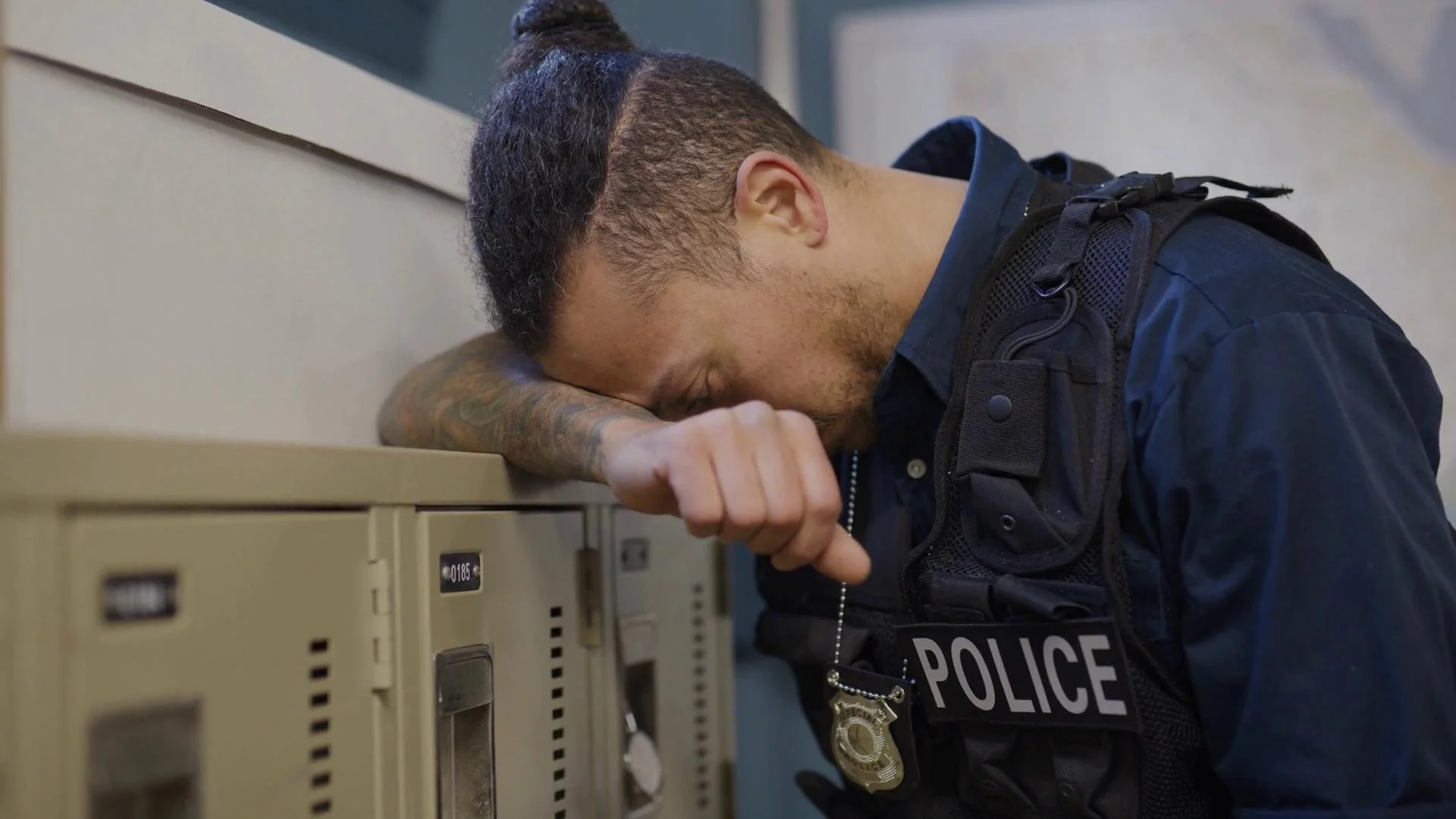
The Hidden Cost of Being the One Who Holds It Together
There's a version of this story that gets told a lot: the first responder who falls apart. The breakdown, the crisis, the dramatic moment where everything comes undone.
That happens. But it's not the most common story.
The more common story is quieter and longer. It's the first responder who holds it together for fifteen years, twenty years, a whole career — who does the job well, who shows up — and who pays a price for that that shows up somewhere else. In their marriage. In their kids. In their body. In the slow erosion of things they used to enjoy and no longer can.
This is the hidden cost. And it's hidden precisely because the person carrying it is so good at not showing it.
What holding it together actually requires
The emotional labor of first responder work is invisible because it's done so well. Every shift involves a continuous process of managing your own responses — suppressing fear, containing grief, staying functional while witnessing things that would destabilize most people entirely.
This isn't a weakness. It's a skill. A highly developed, deeply trained skill that the job demands and that you've perfected over years.
But the suppression doesn't disappear the material. It stores it. And the nervous system that is trained to hold everything in check on the job doesn't always know how to release that training when the shift ends.
Where the cost shows up
In relationships
Partners and family members describe a specific experience: the person who shows up to family life emotionally elsewhere. Present physically but absent in some essential way. Difficulty engaging with minor domestic concerns because they feel trivial against the backdrop of what happens at work. An impatience with other people's problems. A flatness where warmth used to be.
This isn't indifference. It's a nervous system that has been calibrated to real emergencies and struggles to modulate down to the frequency of ordinary life. The gap between what happens on the job and what happens at home becomes harder and harder to bridge.
In the relationship with your own children
This one is particularly painful. The hypervigilance that makes you good at your job — the constant threat assessment, the awareness of everything that could go wrong — doesn't turn off at home. It can manifest as overprotectiveness, as difficulty letting children take normal risks, as an anxiety about their safety that feels constant and disproportionate.
Or it goes the other direction: a difficulty being emotionally present with your children because emotional presence requires the kind of openness that the job has trained you to close down.
In your body
Chronic pain. Sleep that never quite restores. A low-grade exhaustion that doesn't respond to rest. Gastrointestinal problems. Cardiovascular strain. The body keeps the score of twenty years of chronic activation, and eventually the bill comes due.
Many first responders have had these symptoms evaluated medically without resolution, because the source isn't structural. It's neurological. The nervous system has been in a state of chronic stress for so long that the physical symptoms are an expression of that, not an independent condition.
In what you've stopped feeling
The things that used to give pleasure and no longer do. The hobbies abandoned. The social connections that feel like too much effort. The gradual narrowing of life to work and recovery from work, with less and less in between.
This is often the last thing to be named because it happens so gradually. It doesn't feel like a symptom. It feels like just how things are now. Like you've changed. And in a way you have — but not in a way that's permanent or irreversible.
What you can actually do about it
The cost of holding it together doesn't have to be permanent. The nervous system can recalibrate. The emotional flatness can lift. The relationship damage can be repaired, often more than people expect.
But it requires addressing the underlying material — not just the symptoms. Managing stress better, exercising more, sleeping differently: these things have value, but they don't process what's been accumulated. They help you carry the weight more efficiently. They don't put it down.
EMDR addresses the accumulated material directly. It's not a process of talking about everything you've seen — it's a protocol that works with the nervous system to reprocess the stored charge of years of exposure. For first responders who have been holding it together for a long time, the shift that comes from actually putting down the weight rather than just managing it better can be profound.
You've been holding it together for a long time. You're allowed to put some of it down.

Why First Responders Resist Therapy — And What Actually Works Instead
If you're a first responder reading this, there's a decent chance you almost didn't click on it.
Therapy has a reputation problem in first responder culture. It's associated with weakness, with oversharing, with sitting in a room talking about your feelings to someone who has no idea what your job actually involves. It's something other people need. People who can't handle it.
We're not going to tell you that reputation is entirely unfair. Because a lot of the therapy that first responders have been sent to — through EAP programs, through mandatory referrals after critical incidents, through well-meaning HR departments — has been exactly that. Generic. Ill-fitting. Delivered by clinicians who don't understand the culture and apply standard therapeutic approaches to a population for whom standard doesn't work.
The resistance isn't irrational. It's based on experience. What we want to do is explain what's different about the approach that actually works — and why it's different.
Why standard therapy often doesn't work for first responders
It asks for the wrong kind of vulnerability
Traditional talk therapy asks you to sit with uncomfortable emotions, name them, explore where they come from, talk about your childhood, process feelings out loud. For someone whose professional survival has depended on emotional control and forward momentum, this feels not just uncomfortable but actively wrong. Like being asked to malfunction on purpose.
The skills that make you good at your job — composure under pressure, rapid problem-solving, compartmentalization, keeping it together when everyone else is falling apart — are the exact skills that traditional therapy asks you to set aside. No wonder it feels like a bad fit.
The clinician doesn't understand the culture
There's a specific kind of frustration that comes from trying to explain your job to someone who has never been near it. The gallows humor. The bond with your crew. The way you have to check out emotionally on certain calls just to function. The culture of not showing weakness, and why it exists, and what it actually costs.
A clinician who treats this as pathology — who tries to talk you out of the coping mechanisms that have kept you functional — isn't going to get very far. And they shouldn't.
It feels passive and slow
First responders are action-oriented. They solve problems. They make decisions in seconds. Spending fifty minutes exploring how something made you feel, then doing it again next week, without a clear sense of where it's going or when it will be done — that's not a format that makes sense to a population trained for efficiency and outcomes.
What actually works
EMDR — because it doesn't require you to talk everything through
EMDR doesn't ask you to narrate your trauma. You hold the material in your own mind. The therapist doesn't need to know every detail. The processing happens internally, guided by bilateral stimulation — not by extended emotional disclosure.
For first responders, this is often the first therapeutic approach that makes intuitive sense. You're not being asked to perform vulnerability. You're being asked to notice what comes up while a structured protocol does its work. That's a task. That's something you can engage with.
A therapist who understands the culture
This matters more than almost anything else. A clinician who respects the compartmentalization instead of trying to dismantle it. Who understands why the humor exists. Who doesn't pathologize the coping mechanisms that kept you functional for twenty years. Who can work with the culture rather than against it.
Structured, goal-directed treatment
EMDR is not open-ended. There's a protocol. There are specific targets. There's a measurable sense of whether processing is moving. Sessions have a beginning, middle, and end. This is a format that works for people who are used to operating with clear objectives.
You don't have to talk about everything. You don't have to feel it out loud. You just have to show up. We'll work with what you bring.

What Cumulative Trauma Looks Like in First Responders — And Why It’s Different From PTSD
Most conversations about first responder mental health focus on PTSD. The critical incident. The one call that broke through. The moment that changed everything.
That's real. But it's not the whole story — and for many first responders, it's not even the primary story.
The more common experience is something different: a slow accumulation. Hundreds of calls. Thousands of hours. A career's worth of exposure to suffering, death, violence, and human beings in their worst moments. Nothing catastrophic on any given day. But the weight doesn't leave between shifts. And over years, it builds into something that can be just as debilitating as a single traumatic event — and much harder to recognize.
This is cumulative trauma. And understanding how it's different from classic PTSD matters for how it gets treated.
What PTSD looks like — and what cumulative trauma doesn't
Classic PTSD follows a recognizable pattern: a specific traumatic event, followed by intrusive memories, avoidance, hyperarousal, and negative changes in mood and cognition. The person can usually identify what happened. There's a before and an after.
Cumulative trauma is less clean. There's often no single event to point to. The person may not be able to tell you when things changed, only that they did. The symptoms are real but diffuse — and because there's no obvious precipitating incident, the person often doesn't believe they have trauma at all.
"Nothing that bad happened to me. I've seen worse. Other people have it harder."
That sentence — or some version of it — is one of the most common things we hear from first responders who are struggling. The comparison to worse cases is almost universal. And it keeps people from getting help for years.
What cumulative trauma actually looks like
The presentation varies, but certain patterns are common across first responder populations:
Emotional numbing that spreads
It often starts as compartmentalization — a necessary and adaptive skill in the field. You deal with the call, you move on, you don't bring it home. But over time, the compartment gets so full that the lid starts leaking. And the numbing that was supposed to be targeted starts affecting everything: relationships, enjoyment, the ability to feel much of anything positive.
Anger that doesn't match the trigger
Irritability, short fuses, disproportionate reactions to minor frustrations. The person knows their reaction doesn't fit the situation. They often feel ashamed of it. They don't connect it to a career's worth of exposure because there's no obvious line between the exposure and the reaction — just a nervous system running at a threat level that stopped matching reality sometime in the last decade.
Cynicism that hardens into something darker
Healthy cynicism in first responder culture is functional — it's a buffer. But cumulative trauma can turn it into something more pervasive: a generalized expectation that things will go wrong, that people can't be trusted, that nothing matters. This is different from professional skepticism. It starts to color everything.
Physical symptoms without a clear cause
Sleep disruption is almost universal. Chronic pain, gastrointestinal problems, fatigue that doesn't resolve with rest. The body has been in a state of chronic activation for years, and eventually that shows up somatically. Many first responders have had these symptoms investigated medically without resolution because the source isn't structural — it's neurological.
Difficulty transitioning off duty
The inability to decompress after a shift. Still scanning for threats in the grocery store. Sitting with your back to the wall. Difficulty being present with family because part of you is always on the job. The on-duty nervous system state that won't turn off.
Why it's harder to treat than single-incident PTSD
EMDR and other trauma therapies are highly effective for single-incident PTSD because there's a specific target: the memory of the event. The protocol can address it directly, reprocess it, and the symptom picture often resolves significantly.
Cumulative trauma doesn't have one target. It has hundreds, or thousands. The treatment approach has to account for that — working through the layers, identifying the memories that carry the most charge, addressing the negative beliefs that have built up over years of accumulated exposure.
This takes longer. It requires a therapist who understands the culture and the specific way cumulative trauma presents in this population. And it requires the client to accept that there isn't one thing to fix — there's a pattern to address. That's a harder sell to someone who is used to solving problems directly and efficiently.
But it is addressable. Cumulative trauma responds to treatment. The nervous system can recalibrate. The weight can lift. We've seen it happen.
You don't have to have had the worst call of your career to deserve support. If the weight is there, that's enough.

When the Body Holds the Story: Trauma, Neurology, and Why Both Matter
By Joanna Bugden, Supervised Graduate Therapist, NWMHA
There’s a group of people who often fall through the cracks of mental health care: those navigating trauma at the same time as chronic illness, medical trauma, or neurological conditions.
This can look like someone recovering from a traumatic brain injury while also processing the emotional impact of the accident, or someone living with a seizure disorder—whether related to epilepsy, other neurological conditions, or stress-related experiences such as functional neurological symptoms. It may also include healthcare workers or others in high-demand roles whose bodies begin responding in ways that don’t always have a clear medical explanation.
In other cases, it may be family members or loved ones supporting someone through conditions like Alzheimer’s, ALS, or dementia, navigating the emotional weight and ongoing changes that come with those experiences. For others, it may mean living with chronic illness and the loneliness that can come with it or coping with a physical injury sustained in high-risk professions such as first responders or veterans.
Across all of these experiences, there is often an important connection between what someone has been through and how it is held in the body. Experiences don’t just live in our thoughts—they’re also carried in the body and nervous system. When both are given space to be understood and supported, it can open the door to meaningful change.
Trauma affects the brain and nervous system— and why that matters
Trauma doesn’t just affect how we feel—it can also shape how the brain and nervous system respond to stress, memory, and a sense of safety. Over time, experiences can become held not only in our thoughts, but in the body and in the patterns the nervous system develops.
Because of this, responses to trauma and stress don’t always show up in clear or predictable ways. They can take different forms for different people, sometimes affecting both emotional and physical experiences in ways that aren’t always easy to recognize.
The nervous system is constantly taking in information about safety and threat, adjusting in response to both past experiences and what someone may currently be going through. When experiences feel overwhelming—whether ongoing or from the past—these patterns can continue, influencing how the body responds. As a result, certain reactions may feel automatic or difficult to control—not because something is “wrong,” but because the body has adapted in a way that is trying to protect.
Medical trauma is real and underrecognized
Medical trauma can take many forms and can be just as impactful as other difficult experiences. It may come from undergoing or having had invasive or complex medical procedures, living with a chronic illness or navigating the process of healing from one, managing neurological conditions, or recovering from injuries such as traumatic brain injury.
It’s often not only the physical experience itself, but everything that comes with it—the uncertainty of trusting the body again, a sense of loss of control, ongoing medical experiences, and the emotional impact that can follow, or simply feeling alone in it, which can feel deeply isolating. For others, it may be connected to high-risk professions, such as first responders or veterans, where both physical injury and ongoing stress can play a role in recovery.
Some of these experiences can show up in ways that are hard to ignore—like feeling anxious before medical appointments, avoiding care, or having difficult or traumatic memories of past or ongoing medical experiences come up unexpectedly.
In trauma-informed care, these responses are understood not as something being “wrong,” but as the nervous system trying to protect. Therapy can help create space to process these experiences in a way that feels safer and more manageable over time, and to begin making sense of them.
Approaches such as EMDR can be especially helpful in this area. EMDR works by helping the brain process and integrate distressing experiences, so they feel less overwhelming and more manageable over time.
When these experiences are handled with care and understanding, it can help people feel less alone in what they’re going through and begin to reconnect with both their body and their sense of safety.
Somatic presentations — when the body speaks what the mind hasn't processed
Sometimes, what someone has been through doesn’t just stay in their thoughts—it can also show up in the body. This might look like ongoing pain, fatigue, or physical symptoms such as unexplained gastrointestinal issues, even when medical care has been sought and no clear explanation has been found.
This doesn’t make those experiences any less real. In many cases, it reflects how closely the body and nervous system are connected to our experiences, especially when something has been overwhelming or difficult to process.
Approaching these symptoms with curiosity and care, rather than dismissal, can be an important part of helping someone better understand what their body may be holding. In a counseling setting, this often means working with the nervous system in ways that support greater awareness, regulation, and a sense of safety over time, while also creating space to process experiences and gently shift patterns that may no longer feel helpful
If you're navigating trauma alongside a medical or neurological condition and haven't found a therapist who can hold both — that's exactly the kind of work I'm trained to do.

Meet Joanna: On Healing, Whole People, and Why Therapy Found Her
By Joanna Bugden, Supervised Graduate Therapist, NWMHA
I didn’t take a traditional path into counseling. Before starting my training, I spent years working in the music industry — managing music labels, coordinating tours and live events, creating music myself, and working with artists across the USA and Europe. It was fast-paced, creative work that I really enjoyed, but what stayed with me most was something else—how much people carry beneath the surface, and how rarely they have a space to talk about it or feel understood.
Over time, I realized I wanted to make a different kind of impact in people’s lives. I had often found myself emotionally supporting the artists I worked with and the people around me, and alongside my own lived experiences, I felt increasingly drawn toward counseling. I eventually returned to school — first at Washington State University for Clinical Psychology, and now at the University of Western States for Clinical Mental Health Counseling. Through my studies, I found myself drawn to questions I had been asking for a long time: how trauma affects people differently, how the body and brain are involved in that process, and what it actually means to process and move through those experiences, rather than just get by.
What I bring to this work
I grew up surrounded by people in healthcare, with family members practicing everything from Western medicine to integrative and holistic care, including acupuncture. That early exposure shaped how I think about healing and the connection between the mind and body—as something that needs to address the whole person, not just a diagnosis or set of symptoms.
I’m particularly drawn to clients navigating trauma alongside a medical condition, chronic illness, or past medical experiences—including different types of neurological conditions—as well as those experiencing the chronic stress of high-demand professions such as first responders, healthcare workers, and veterans. While these are areas of particular interest, I also work with a wide range of trauma and mental health concerns. I also value a multicultural perspective on health and healing and aim to approach this work with cultural awareness and respect for each client’s unique background.
My approach
I take an integrative, humanistic approach to counseling, drawing from person-centered, trauma-informed, and somatic perspectives, including utilizing EMDR in my work. I don’t believe there’s a one-size-fits-all approach to therapy. My goal is to create a space where clients feel seen and supported as whole people—not just as a diagnosis or presenting problem, but as individuals—and where we can work together to find what is most helpful for them.
A little more about me
Outside of the office, I’m a devoted amateur baker and self-proclaimed foodie, with my own micro-bakery that has been catering events and feeding friends with my sweet creations. I love to travel and have spent many years living in Europe, and I really enjoy discovering new cultures and learning about them.
I also find great joy in spending time in nature with my husband and connecting to music and the arts. I strongly value staying connected to my community through giving back—I have volunteered with PAWS as a pet foster, and regularly donate baked goods to our local homeless shelters, and the “Seattle Community Fridge” programs.
A quote that I hold close and try to live by is from Hippocrates:
“Healing is a matter of time, but it is sometimes also a matter of opportunity.”

"I Tried EMDR and It Didn't Work" — What Might Have Actually Happened
By Northwest Mental Health Alliance
We hear this regularly. Someone comes in, mentions they tried EMDR before, and says it didn't work. Sometimes they say it made things worse. Sometimes they just say nothing seemed to happen.
Before we take that at face value, we ask a few questions. And more often than not, what they describe doesn't sound like EMDR.
What people describe
The accounts vary, but certain patterns come up repeatedly.
Someone who spent sessions with their therapist doing eye movements for long stretches — twenty minutes at a time — without pausing, without the therapist checking in, without any sense of where the session was going. They left feeling disoriented and didn't notice any lasting change.
Someone who was moved into trauma processing in the second or third session, before any groundwork had been laid. They left feeling flooded and raw. Subsequent sessions were hard to attend. Things felt stirred up rather than resolved.
Someone whose sessions consistently ran over time or ended abruptly, with no real closure. They'd leave carrying whatever had come up in session — sometimes for days.
Someone whose therapist described themselves as EMDR trained but seemed to be using the bilateral stimulation as an add-on to regular talk therapy, rather than following a structured protocol.
If any of these descriptions sound familiar, it's worth considering that what you experienced may not have been complete EMDR. Because complete EMDR, delivered correctly, shouldn't feel like this.
What EMDR is actually supposed to feel like
Real EMDR is hard work. It asks you to hold difficult memories in mind and trust a process that can feel strange and nonlinear. Some activation between sessions is normal — your brain is continuing to process material after the session ends.
But there's a difference between hard work that moves somewhere and hard work that leaves you worse off.
Properly delivered EMDR should feel like: a session with a clear beginning, middle, and end. Processing that has direction, even when it feels circuitous. A sense that you are being tracked and guided — not left alone with difficult material. A clear closure at the end of every session so you can leave and function. And over time, a palpable shift in how the targeted material feels — not just that you've talked about it, but that your relationship to it has actually changed.
Why incomplete EMDR is so common
EMDR basic training is a two-day course. The therapist learns the protocol in theory, practices it briefly with other trainees, and is then credentialed to offer it to clients. Most therapists who complete basic training never pursue the consultation hours required for EMDRIA certification — the process that would have an experienced clinician actually look at their work and catch errors.
The result is a significant number of practitioners using the bilateral stimulation component of EMDR without the full protocol that surrounds it. They're not being dishonest. They believe they're doing EMDR. They just weren't trained deeply enough to know the difference between what they're doing and what EMDR fully requires.
What this means for you
If you've had a negative or unsuccessful experience with EMDR, we want to offer you a few things.
First: it wasn't your fault. If the protocol wasn't followed correctly, the outcome isn't a reflection of your readiness to heal or your capacity to benefit from treatment.
Second: EMDR itself isn't the problem. The evidence base for EMDR is substantial. When delivered correctly, by a well-trained and supervised clinician, it is one of the most effective treatments available for trauma. An incomplete or incorrect version is not representative of what the approach can do.
Third: it may be worth trying again. We understand the hesitation — why go back to something that hurt you or didn't help? Because this time, you'd know what to look for. And you'd know what to ask.
What we do differently
At NWMHA, EMDR is our specialty. Every clinician here practices under ongoing supervision and consultation. Cases are reviewed regularly. No one is practicing in isolation.
We follow the full eight-phase protocol. Every time. Preparation before processing. Resourcing before touching trauma material. Closure at the end of every session. Reevaluation at the start of the next.
If you've been burned before and you're willing to try again — we'd be honored to talk to you. Your experience matters to us, and we'll take it seriously from the very first conversation.
Apply for an intake — we respond within 3 business days. If you've had a difficult experience with EMDR before, please mention it in your application so we can approach things thoughtfully. →