
BlogLatest Articles
Shift Work, Hypervigilance, and Why Your Nervous System Never Fully Clocks Out
You've been off for six hours. You should be asleep. Instead you're lying there, aware of every sound in the house, running a low-level threat assessment of your neighborhood, your family, the creak in the hallway that is definitely just the house settling but that your nervous system has flagged anyway.
This is not a sleep problem. This is a nervous system problem. And it's one of the most common — and least addressed — occupational consequences of first responder work.
What hypervigilance actually is
Hypervigilance is the nervous system operating at a sustained elevated threat level. It's not anxiety in the ordinary sense — it's not catastrophic thinking or worry about specific things. It's a baseline state of activation: scanning, assessing, ready to respond. The threat detection system running continuously even when there's nothing to detect.
In the field, this is an asset. It keeps you alive. It keeps your crew alive. The hyper-awareness that catches the thing everyone else missed, the gut sense that something is wrong before you can articulate why — these are the products of a nervous system trained to stay on.
The problem is that the nervous system doesn't have an off switch. Once it's been trained to maintain that level of vigilance, it maintains it. Off duty. At home. On vacation. In the middle of the night when nothing is happening and nothing is going to happen and you still can't sleep because your amygdala doesn't know that.
What shift work does to the nervous system
The human nervous system is designed to regulate around a consistent light-dark cycle. Sleep consolidates memory, processes emotional material, and restores the nervous system's capacity to regulate. When that cycle is disrupted — through rotating shifts, night shifts, long shifts with irregular schedules — the nervous system loses one of its primary recovery mechanisms.
For first responders who are already carrying significant cumulative exposure, this matters enormously. The processing that would normally happen during sleep — the consolidation of difficult experiences, the emotional regulation that happens in REM — is interrupted or insufficient. The material accumulates without adequate processing. And the nervous system that was already running hot runs hotter.
The specific problem of night shifts
Night shift workers have consistently higher rates of cardiovascular disease, metabolic disorders, mood disorders, and immune dysfunction than day shift workers. Their nervous systems are chronically working against their biology. For first responders on night shifts who are also carrying significant traumatic exposure, the cumulative physiological load is substantial.
The day-off paradox
Many first responders describe a counterintuitive experience: days off feel harder, not easier. The structure of the shift is gone. The clear role and purpose are absent. The nervous system that has been oriented toward mission has nothing to orient toward and doesn't know what to do with the activation it's carrying.
This can manifest as restlessness, irritability, difficulty being present, a pulling toward work even when you don't want to be there. It's not workaholism. It's a nervous system that has been trained to a specific state and doesn't know how to downregulate without the structure that state requires.
The hypervigilance-sleep-trauma cycle
Here's why this becomes a self-reinforcing problem. Hypervigilance disrupts sleep. Disrupted sleep impairs the nervous system's ability to process traumatic material. Unprocessed traumatic material maintains and intensifies hypervigilance. Which disrupts sleep further.
This cycle can run for years. Most of the interventions people try — better sleep hygiene, limiting screens, melatonin, exercise — work at the edges but don't address the core. Because the core isn't a sleep problem. It's a nervous system that has been trained into a state it can't get out of on its own.
What actually interrupts the cycle
Two things work at the level of the nervous system itself rather than just the symptoms.
The first is addressing the traumatic material that's maintaining the activation. EMDR targets the specific memories and accumulated exposure that are keeping the threat detection system engaged. When the stored material is reprocessed — when the nervous system stops treating old experiences as active threats — the baseline activation level can come down. Not all the way, not immediately, but meaningfully.
The second is somatic work — approaches that work directly with the body's activation patterns rather than through cognitive or narrative processing. This might be integrated into EMDR or complement it, depending on the individual presentation.
The goal isn't to eliminate vigilance. Your vigilance is part of what makes you good at your job and it's not something to pathologize. The goal is to give your nervous system the ability to come down when the situation actually calls for it — to have a range again, rather than just a floor.
Your nervous system learned to do this for good reasons. The work isn't about undoing that training. It's about giving your system the flexibility to know when it's actually safe to rest.
EMDR for Dispatchers — The Most Overlooked Population in First Responder Mental Health
When people talk about first responder mental health, they talk about firefighters, police officers, paramedics. The people in the field. The ones whose faces you see at the scene.
Dispatchers are almost never in that conversation. And that's a serious problem.
Because dispatchers are exposed to trauma in a way that is unique, relentless, and largely invisible — and the mental health field has been slow to recognize it, slow to study it, and slow to develop resources specifically for them.
This post is specifically for dispatchers. And for anyone who cares about one.
What dispatchers actually experience
A dispatcher does not go to the scene. This is often used — sometimes by dispatchers themselves — to minimize what they experience. They weren't there. They didn't see it.
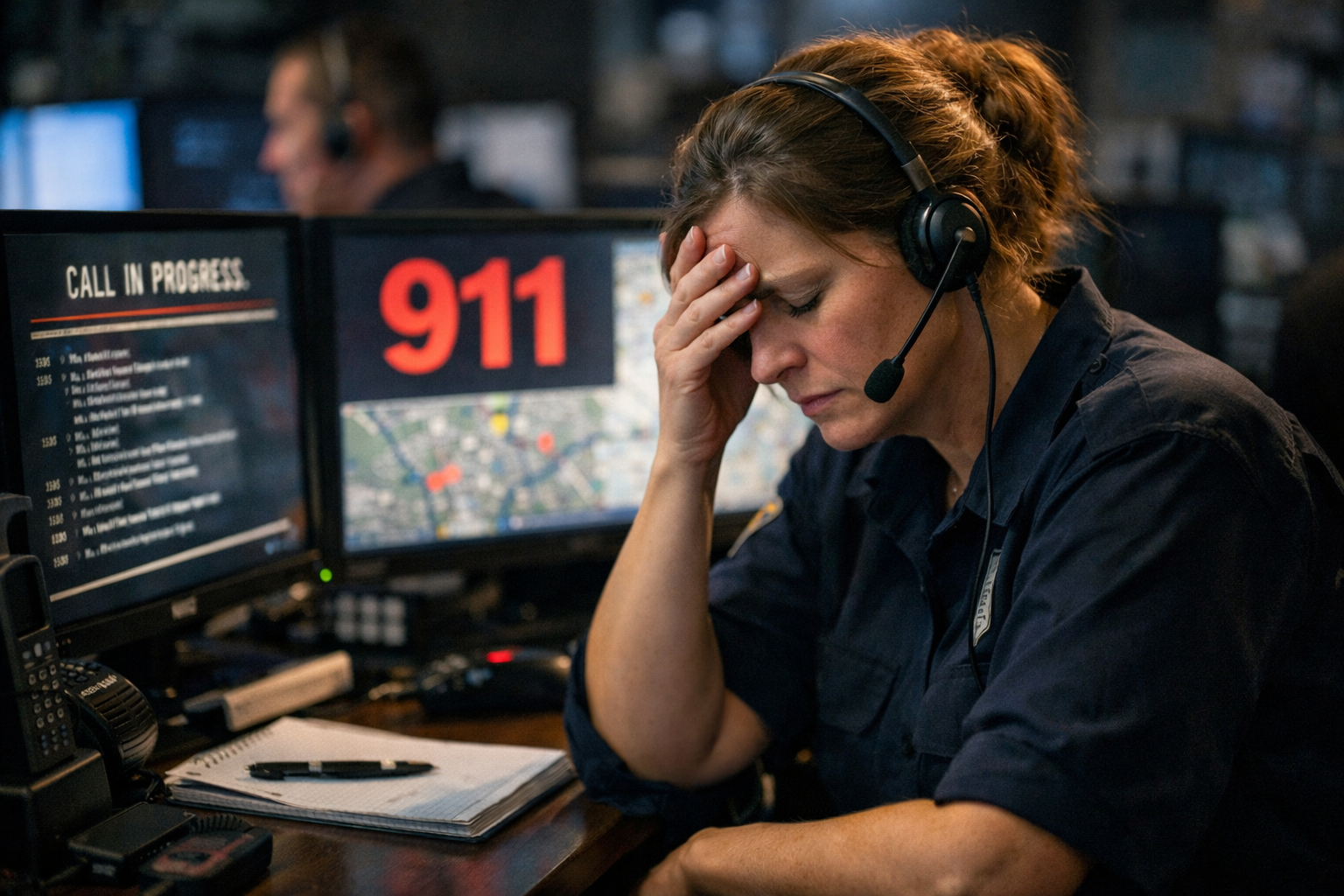
What they did do: they heard it. In real time, without the ability to intervene, while simultaneously managing multiple channels, tracking multiple units, and making decisions that affect outcomes they will never directly witness.
They were on the line with the person who didn't make it. They gave CPR instructions to a parent whose child wasn't breathing. They stayed on the call during the mass casualty event. They heard what happened to the officer before units arrived. And then they took the next call.
The absence of visual exposure doesn't reduce the traumatic load. In some ways the auditory experience — without the visual context, without the closure of seeing the resolution, without the physical presence that at least allows for action — creates a particular kind of incomplete processing that is especially prone to getting stuck.
The specific burden of secondary traumatic stress
Dispatchers experience what researchers call secondary traumatic stress — trauma that develops from exposure to other people's traumatic experiences rather than from direct personal threat. The symptoms mirror PTSD closely: intrusive memories (often auditory rather than visual), hypervigilance, emotional numbing, sleep disruption, difficulty functioning outside of work.
Secondary traumatic stress is real trauma. It responds to the same treatments. And it tends to be significantly under-treated in dispatchers because dispatchers themselves often don't feel entitled to claim it.
"I wasn't even there." That sentence has kept a lot of dispatchers from getting help they needed.
The additional weight dispatchers carry
Outcome uncertainty
Field responders usually know what happened. They were there. Dispatchers often don't. A call ends, units clear, and the dispatcher moves on to the next call without knowing whether the person survived. That unresolved uncertainty accumulates.
Absolute responsibility with limited control
Dispatchers make consequential decisions under extreme time pressure with incomplete information, while managing multiple simultaneous channels. The responsibility is enormous. The control over outcomes is limited. That combination — high responsibility, low control — is one of the most psychologically taxing situations a person can be in.
Invisibility within the first responder community
Dispatchers are often not fully included in the first responder identity, even when they work alongside field personnel every day. The peer support resources, the critical incident debriefs, the cultural acknowledgment of what the job costs — these are less consistently available to dispatchers than to field responders. The isolation this creates adds to the burden.
Physical immobility during crisis
Field responders can act. When the adrenaline activates, there is physical action to discharge it. Dispatchers remain seated, voice controlled, managing the situation through communication alone while their nervous system is running the same threat response as if they were in the field. The physical immobility during activation is a specific stressor that has real physiological consequences over time.
Why EMDR works particularly well for dispatchers
EMDR doesn't require you to recreate the visual scene because for dispatchers, the traumatic material is often auditory. The protocol can target sounds, voices, the specific moment of a call that has stayed with you — without requiring you to construct a visual memory you don't have.
It also works well for the diffuse, cumulative nature of dispatcher trauma. A career of thousands of calls, the ones that stayed, the outcomes that were never resolved — these can be systematically addressed in a way that indefinite talk therapy typically can't.
We work with dispatchers — and have specialized training to do EMDR with dispatchers. We understand what the job involves. And we don't ask you to justify why it affected you.
The Hidden Cost of Being the One Who Holds It Together
There's a version of this story that gets told a lot: the first responder who falls apart. The breakdown, the crisis, the dramatic moment where everything comes undone.
That happens. But it's not the most common story.
The more common story is quieter and longer. It's the first responder who holds it together for fifteen years, twenty years, a whole career — who does the job well, who shows up — and who pays a price for that that shows up somewhere else. In their marriage. In their kids. In their body. In the slow erosion of things they used to enjoy and no longer can.
This is the hidden cost. And it's hidden precisely because the person carrying it is so good at not showing it.
What holding it together actually requires
The emotional labor of first responder work is invisible because it's done so well. Every shift involves a continuous process of managing your own responses — suppressing fear, containing grief, staying functional while witnessing things that would destabilize most people entirely.
This isn't a weakness. It's a skill. A highly developed, deeply trained skill that the job demands and that you've perfected over years.
But the suppression doesn't disappear the material. It stores it. And the nervous system that is trained to hold everything in check on the job doesn't always know how to release that training when the shift ends.
Where the cost shows up
In relationships
Partners and family members describe a specific experience: the person who shows up to family life emotionally elsewhere. Present physically but absent in some essential way. Difficulty engaging with minor domestic concerns because they feel trivial against the backdrop of what happens at work. An impatience with other people's problems. A flatness where warmth used to be.
This isn't indifference. It's a nervous system that has been calibrated to real emergencies and struggles to modulate down to the frequency of ordinary life. The gap between what happens on the job and what happens at home becomes harder and harder to bridge.
In the relationship with your own children
This one is particularly painful. The hypervigilance that makes you good at your job — the constant threat assessment, the awareness of everything that could go wrong — doesn't turn off at home. It can manifest as overprotectiveness, as difficulty letting children take normal risks, as an anxiety about their safety that feels constant and disproportionate.
Or it goes the other direction: a difficulty being emotionally present with your children because emotional presence requires the kind of openness that the job has trained you to close down.
In your body
Chronic pain. Sleep that never quite restores. A low-grade exhaustion that doesn't respond to rest. Gastrointestinal problems. Cardiovascular strain. The body keeps the score of twenty years of chronic activation, and eventually the bill comes due.
Many first responders have had these symptoms evaluated medically without resolution, because the source isn't structural. It's neurological. The nervous system has been in a state of chronic stress for so long that the physical symptoms are an expression of that, not an independent condition.
In what you've stopped feeling
The things that used to give pleasure and no longer do. The hobbies abandoned. The social connections that feel like too much effort. The gradual narrowing of life to work and recovery from work, with less and less in between.
This is often the last thing to be named because it happens so gradually. It doesn't feel like a symptom. It feels like just how things are now. Like you've changed. And in a way you have — but not in a way that's permanent or irreversible.
What you can actually do about it
The cost of holding it together doesn't have to be permanent. The nervous system can recalibrate. The emotional flatness can lift. The relationship damage can be repaired, often more than people expect.
But it requires addressing the underlying material — not just the symptoms. Managing stress better, exercising more, sleeping differently: these things have value, but they don't process what's been accumulated. They help you carry the weight more efficiently. They don't put it down.
EMDR addresses the accumulated material directly. It's not a process of talking about everything you've seen — it's a protocol that works with the nervous system to reprocess the stored charge of years of exposure. For first responders who have been holding it together for a long time, the shift that comes from actually putting down the weight rather than just managing it better can be profound.
You've been holding it together for a long time. You're allowed to put some of it down.

Why First Responders Resist Therapy — And What Actually Works Instead
If you're a first responder reading this, there's a decent chance you almost didn't click on it.
Therapy has a reputation problem in first responder culture. It's associated with weakness, with oversharing, with sitting in a room talking about your feelings to someone who has no idea what your job actually involves. It's something other people need. People who can't handle it.
We're not going to tell you that reputation is entirely unfair. Because a lot of the therapy that first responders have been sent to — through EAP programs, through mandatory referrals after critical incidents, through well-meaning HR departments — has been exactly that. Generic. Ill-fitting. Delivered by clinicians who don't understand the culture and apply standard therapeutic approaches to a population for whom standard doesn't work.
The resistance isn't irrational. It's based on experience. What we want to do is explain what's different about the approach that actually works — and why it's different.
Why standard therapy often doesn't work for first responders
It asks for the wrong kind of vulnerability
Traditional talk therapy asks you to sit with uncomfortable emotions, name them, explore where they come from, talk about your childhood, process feelings out loud. For someone whose professional survival has depended on emotional control and forward momentum, this feels not just uncomfortable but actively wrong. Like being asked to malfunction on purpose.
The skills that make you good at your job — composure under pressure, rapid problem-solving, compartmentalization, keeping it together when everyone else is falling apart — are the exact skills that traditional therapy asks you to set aside. No wonder it feels like a bad fit.
The clinician doesn't understand the culture
There's a specific kind of frustration that comes from trying to explain your job to someone who has never been near it. The gallows humor. The bond with your crew. The way you have to check out emotionally on certain calls just to function. The culture of not showing weakness, and why it exists, and what it actually costs.
A clinician who treats this as pathology — who tries to talk you out of the coping mechanisms that have kept you functional — isn't going to get very far. And they shouldn't.
It feels passive and slow
First responders are action-oriented. They solve problems. They make decisions in seconds. Spending fifty minutes exploring how something made you feel, then doing it again next week, without a clear sense of where it's going or when it will be done — that's not a format that makes sense to a population trained for efficiency and outcomes.
What actually works
EMDR — because it doesn't require you to talk everything through
EMDR doesn't ask you to narrate your trauma. You hold the material in your own mind. The therapist doesn't need to know every detail. The processing happens internally, guided by bilateral stimulation — not by extended emotional disclosure.
For first responders, this is often the first therapeutic approach that makes intuitive sense. You're not being asked to perform vulnerability. You're being asked to notice what comes up while a structured protocol does its work. That's a task. That's something you can engage with.
A therapist who understands the culture
This matters more than almost anything else. A clinician who respects the compartmentalization instead of trying to dismantle it. Who understands why the humor exists. Who doesn't pathologize the coping mechanisms that kept you functional for twenty years. Who can work with the culture rather than against it.
Structured, goal-directed treatment
EMDR is not open-ended. There's a protocol. There are specific targets. There's a measurable sense of whether processing is moving. Sessions have a beginning, middle, and end. This is a format that works for people who are used to operating with clear objectives.
You don't have to talk about everything. You don't have to feel it out loud. You just have to show up. We'll work with what you bring.
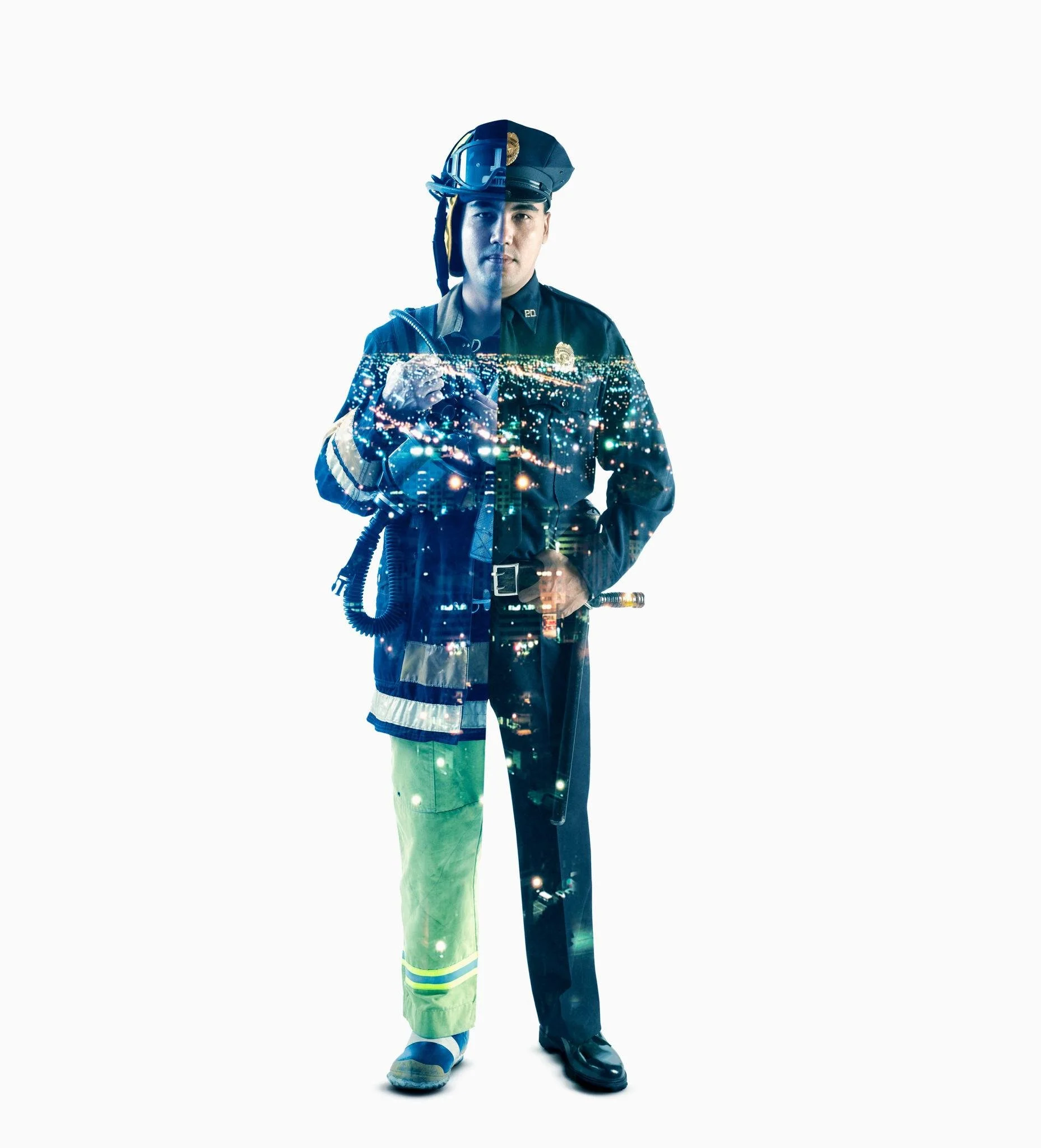
What Cumulative Trauma Looks Like in First Responders — And Why It’s Different From PTSD
Most conversations about first responder mental health focus on PTSD. The critical incident. The one call that broke through. The moment that changed everything.
That's real. But it's not the whole story — and for many first responders, it's not even the primary story.
The more common experience is something different: a slow accumulation. Hundreds of calls. Thousands of hours. A career's worth of exposure to suffering, death, violence, and human beings in their worst moments. Nothing catastrophic on any given day. But the weight doesn't leave between shifts. And over years, it builds into something that can be just as debilitating as a single traumatic event — and much harder to recognize.
This is cumulative trauma. And understanding how it's different from classic PTSD matters for how it gets treated.
What PTSD looks like — and what cumulative trauma doesn't
Classic PTSD follows a recognizable pattern: a specific traumatic event, followed by intrusive memories, avoidance, hyperarousal, and negative changes in mood and cognition. The person can usually identify what happened. There's a before and an after.
Cumulative trauma is less clean. There's often no single event to point to. The person may not be able to tell you when things changed, only that they did. The symptoms are real but diffuse — and because there's no obvious precipitating incident, the person often doesn't believe they have trauma at all.
"Nothing that bad happened to me. I've seen worse. Other people have it harder."
That sentence — or some version of it — is one of the most common things we hear from first responders who are struggling. The comparison to worse cases is almost universal. And it keeps people from getting help for years.
What cumulative trauma actually looks like
The presentation varies, but certain patterns are common across first responder populations:
Emotional numbing that spreads
It often starts as compartmentalization — a necessary and adaptive skill in the field. You deal with the call, you move on, you don't bring it home. But over time, the compartment gets so full that the lid starts leaking. And the numbing that was supposed to be targeted starts affecting everything: relationships, enjoyment, the ability to feel much of anything positive.
Anger that doesn't match the trigger
Irritability, short fuses, disproportionate reactions to minor frustrations. The person knows their reaction doesn't fit the situation. They often feel ashamed of it. They don't connect it to a career's worth of exposure because there's no obvious line between the exposure and the reaction — just a nervous system running at a threat level that stopped matching reality sometime in the last decade.
Cynicism that hardens into something darker
Healthy cynicism in first responder culture is functional — it's a buffer. But cumulative trauma can turn it into something more pervasive: a generalized expectation that things will go wrong, that people can't be trusted, that nothing matters. This is different from professional skepticism. It starts to color everything.
Physical symptoms without a clear cause
Sleep disruption is almost universal. Chronic pain, gastrointestinal problems, fatigue that doesn't resolve with rest. The body has been in a state of chronic activation for years, and eventually that shows up somatically. Many first responders have had these symptoms investigated medically without resolution because the source isn't structural — it's neurological.
Difficulty transitioning off duty
The inability to decompress after a shift. Still scanning for threats in the grocery store. Sitting with your back to the wall. Difficulty being present with family because part of you is always on the job. The on-duty nervous system state that won't turn off.
Why it's harder to treat than single-incident PTSD
EMDR and other trauma therapies are highly effective for single-incident PTSD because there's a specific target: the memory of the event. The protocol can address it directly, reprocess it, and the symptom picture often resolves significantly.
Cumulative trauma doesn't have one target. It has hundreds, or thousands. The treatment approach has to account for that — working through the layers, identifying the memories that carry the most charge, addressing the negative beliefs that have built up over years of accumulated exposure.
This takes longer. It requires a therapist who understands the culture and the specific way cumulative trauma presents in this population. And it requires the client to accept that there isn't one thing to fix — there's a pattern to address. That's a harder sell to someone who is used to solving problems directly and efficiently.
But it is addressable. Cumulative trauma responds to treatment. The nervous system can recalibrate. The weight can lift. We've seen it happen.
You don't have to have had the worst call of your career to deserve support. If the weight is there, that's enough.