
EMDR for Dispatchers — The Most Overlooked Population in First Responder Mental Health
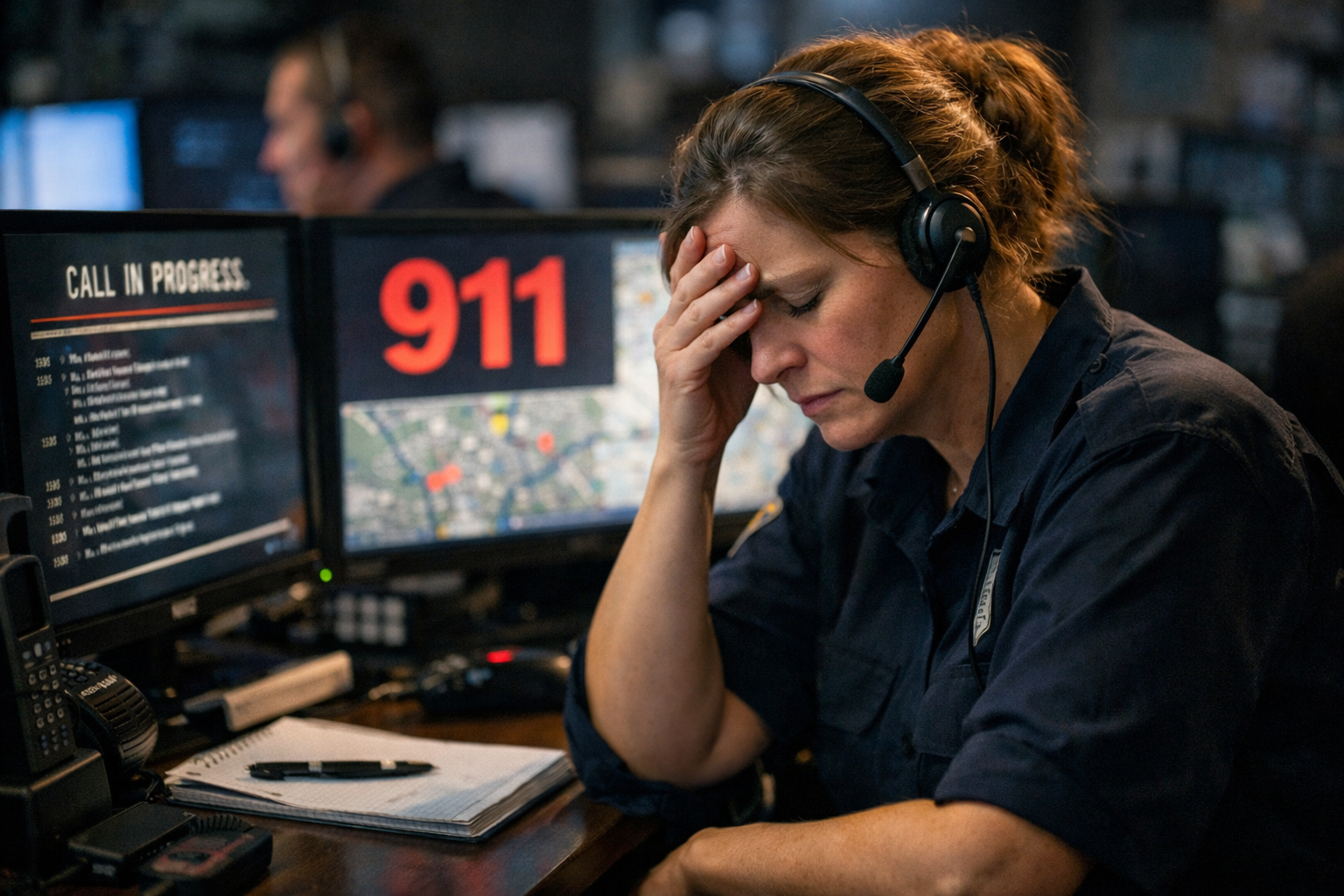
When people talk about first responder mental health, they talk about firefighters, police officers, paramedics. The people in the field. The ones whose faces you see at the scene.
Dispatchers are almost never in that conversation. And that's a serious problem.
Because dispatchers are exposed to trauma in a way that is unique, relentless, and largely invisible — and the mental health field has been slow to recognize it, slow to study it, and slow to develop resources specifically for them.
This post is specifically for dispatchers. And for anyone who cares about one.
What dispatchers actually experience
A dispatcher does not go to the scene. This is often used — sometimes by dispatchers themselves — to minimize what they experience. They weren't there. They didn't see it.
What they did do: they heard it. In real time, without the ability to intervene, while simultaneously managing multiple channels, tracking multiple units, and making decisions that affect outcomes they will never directly witness.
They were on the line with the person who didn't make it. They gave CPR instructions to a parent whose child wasn't breathing. They stayed on the call during the mass casualty event. They heard what happened to the officer before units arrived. And then they took the next call.
The absence of visual exposure doesn't reduce the traumatic load. In some ways the auditory experience — without the visual context, without the closure of seeing the resolution, without the physical presence that at least allows for action — creates a particular kind of incomplete processing that is especially prone to getting stuck.
The specific burden of secondary traumatic stress
Dispatchers experience what researchers call secondary traumatic stress — trauma that develops from exposure to other people's traumatic experiences rather than from direct personal threat. The symptoms mirror PTSD closely: intrusive memories (often auditory rather than visual), hypervigilance, emotional numbing, sleep disruption, difficulty functioning outside of work.
Secondary traumatic stress is real trauma. It responds to the same treatments. And it tends to be significantly under-treated in dispatchers because dispatchers themselves often don't feel entitled to claim it.
"I wasn't even there." That sentence has kept a lot of dispatchers from getting help they needed.
The additional weight dispatchers carry
Outcome uncertainty
Field responders usually know what happened. They were there. Dispatchers often don't. A call ends, units clear, and the dispatcher moves on to the next call without knowing whether the person survived. That unresolved uncertainty accumulates.
Absolute responsibility with limited control
Dispatchers make consequential decisions under extreme time pressure with incomplete information, while managing multiple simultaneous channels. The responsibility is enormous. The control over outcomes is limited. That combination — high responsibility, low control — is one of the most psychologically taxing situations a person can be in.
Invisibility within the first responder community
Dispatchers are often not fully included in the first responder identity, even when they work alongside field personnel every day. The peer support resources, the critical incident debriefs, the cultural acknowledgment of what the job costs — these are less consistently available to dispatchers than to field responders. The isolation this creates adds to the burden.
Physical immobility during crisis
Field responders can act. When the adrenaline activates, there is physical action to discharge it. Dispatchers remain seated, voice controlled, managing the situation through communication alone while their nervous system is running the same threat response as if they were in the field. The physical immobility during activation is a specific stressor that has real physiological consequences over time.
Why EMDR works particularly well for dispatchers
EMDR doesn't require you to recreate the visual scene because for dispatchers, the traumatic material is often auditory. The protocol can target sounds, voices, the specific moment of a call that has stayed with you — without requiring you to construct a visual memory you don't have.
It also works well for the diffuse, cumulative nature of dispatcher trauma. A career of thousands of calls, the ones that stayed, the outcomes that were never resolved — these can be systematically addressed in a way that indefinite talk therapy typically can't.
We work with dispatchers — and have specialized training to do EMDR with dispatchers. We understand what the job involves. And we don't ask you to justify why it affected you.