
BlogLatest Articles
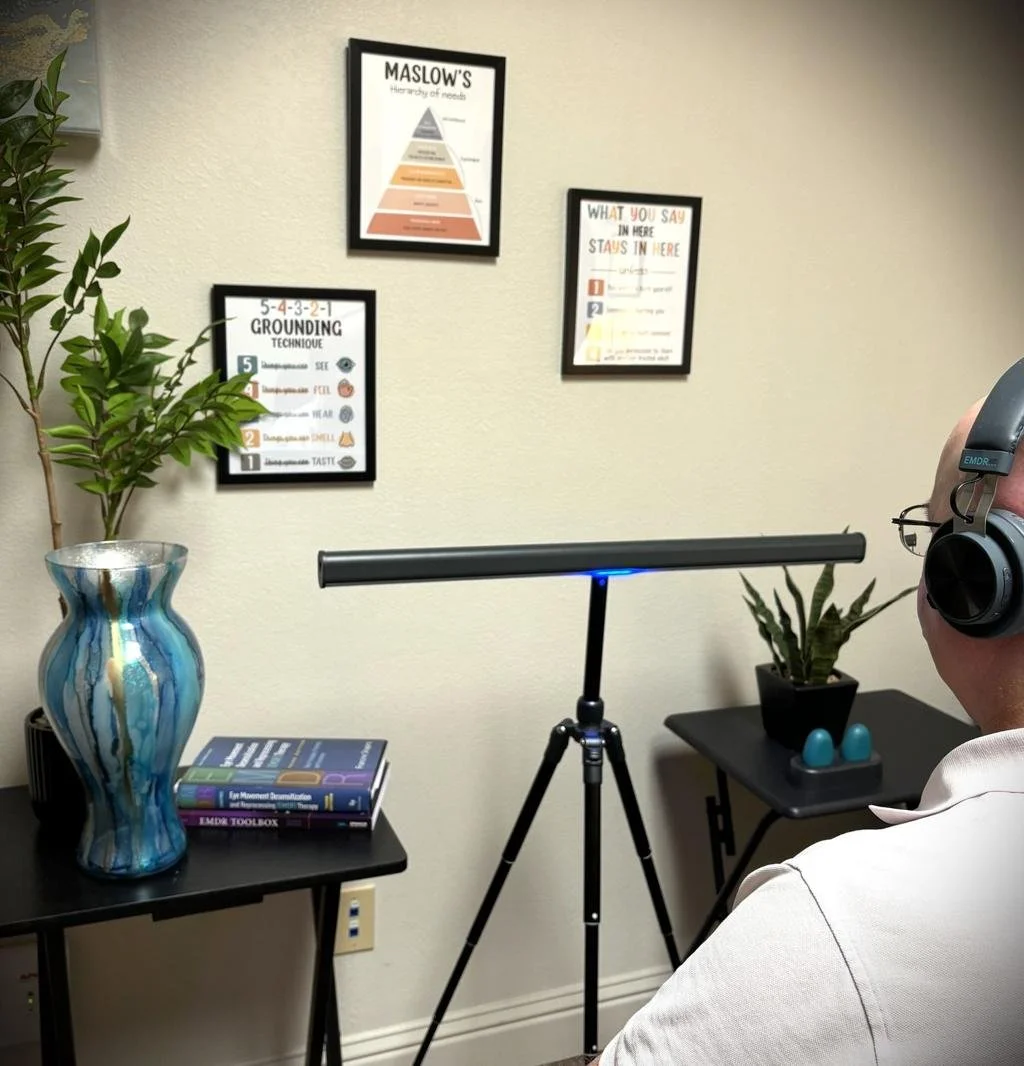
EMDR for Kids — What Parents Need to Know
If your child has been through something hard — a scary medical experience, a loss, an accident, bullying, or something you can't quite put your finger on but know is affecting them — and someone suggested EMDR, you probably had questions.
Is EMDR safe for kids? Will they have to talk about what happened? What does it even look like for a child?
Here's what we tell parents in our office.
EMDR can be effective for children
EMDR wasn't originally developed for children, but it's been adapted in pediatric populations. In some ways, kids respond faster. Their brains are more plastic. Trauma that's been present for a year in a child hasn't had decades to calcify the way it might in an adult.
How EMDR is different for kids
It's more playful
Child-adapted EMDR doesn't look like adult EMDR. Good child therapists use age-appropriate tools — storytelling, drawing, puppets, games, sand trays. The bilateral stimulation might be taps on the knees rather than eye movements. The language is different. The pace is slower.
They don't have to explain everything
One of the most common parent fears: "My child doesn't want to talk about what happened. Will they be forced to?" No. EMDR doesn't require verbal narration of trauma. Your child holds the memory in their own mind. The therapist doesn't need to know every detail.
You're involved
A good child EMDR therapist keeps you in the loop. You'll understand the treatment plan, you'll know what your child is working on in general terms, and you'll get guidance on how to support them at home. You're part of the team.
Signs EMDR might be a good fit for your child
Had a specific scary or distressing event (accident, medical procedure, witnessed something frightening)
Experienced bullying, social trauma, or relational harm
Has anxiety, sleep problems, or behavioral changes that started after a specific event
Has been through a loss — a person, a pet, a big life change
Shows physical symptoms (stomachaches, headaches) with no clear medical cause
Is neurodivergent and has had experiences that felt overwhelming to their nervous system
What about teenagers
Teens are often excellent EMDR candidates — and often more open to it than you'd expect, once they understand that they're not going to have to "talk about their feelings" for an hour every week. The structured nature of EMDR often appeals to adolescents who feel uncomfortable with open-ended therapy.
What to tell your child about their first session
Keep it simple. Something like: "You're going to meet someone who helps kids when their brain gets stuck on something scary or hard. You don't have to tell them anything you don't want to. You can always say stop."
You don't need to have all the answers before you apply. Tell us about your child and we'll figure out the right path together.
Apply for a child or teen intake — we respond within 3 business days. →